Trails, sand and snow
REVR CM7
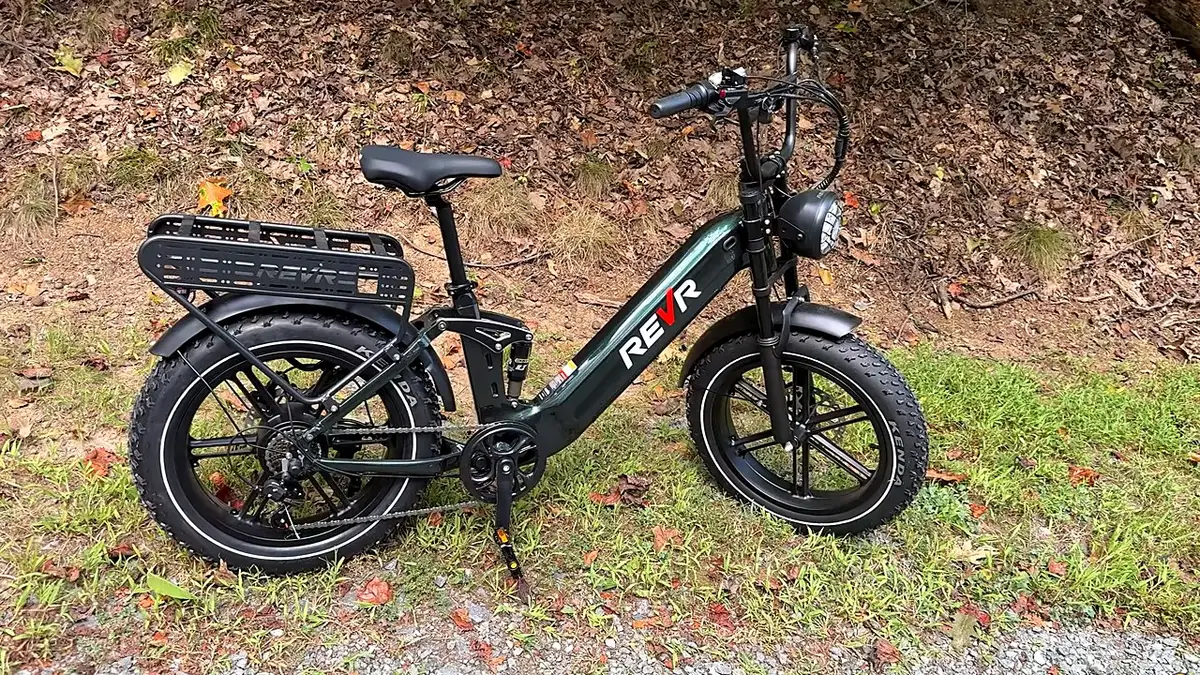
A comfortable full-suspension step-through for gravel commutes; heavy. Read my REVR CM7 review.
$1,399 · 500 W · 864 Wh · 80 mi rated

Some links on this page are affiliate links. If you buy through them, I may earn a commission at no extra cost to you. Read the disclosure.
Guides · Updated
| Photo | Bike | AEB Score | Price | Buy |
|---|---|---|---|---|
| REVR CM7Trails, sand and snow | 7.7/10 AEB Score | $1,399 | Check price of the REVR CM7 at REVR (opens in a new tab) | |
| Ride1Up Cafe CruiserCruising around town | 7.1/10 AEB Score | $1,395 | Check price of the Ride1Up Cafe Cruiser at Ride1Up (opens in a new tab) | |
| Ride1Up TurrisCommuting and errands | 7.1/10 AEB Score | $1,395 | Check price of the Ride1Up Turris at Ride1Up (opens in a new tab) | |
| Qronge LavaFolding and small spaces | 6.2/10 AEB Score | $899 | Check price of the Qronge Lava at Qronge (opens in a new tab) | |
| Rad Power Bikes RadWagon 4Kids and cargo | 6.1/10 AEB Score | $1,299 | Check price of the Rad Power Bikes RadWagon 4 at Rad Power Bikes (opens in a new tab) | |
| Ainohot Terra | 6.8/10 AEB Score | $799 | Check price of the Ainohot Terra at Ainohot (opens in a new tab) |
Prices are from the brand sites and can change. Most buttons are affiliate links: I may earn a commission at no extra cost to you. Disclosure · How the AEB Score works
Every bike here is one I've actually ridden and filmed, and each listed for $1,500 or less when I checked. Bikes that are in stock come first with their current price; sold-out ones are at the end with no price. Prices change, so check the brand before you buy.
Some of these are affiliate links: I may earn a commission at no extra cost to you. Disclosure
Trails, sand and snow
A comfortable full-suspension step-through for gravel commutes; heavy. Read my REVR CM7 review.
$1,399 · 500 W · 864 Wh · 80 mi rated
Cruising around town
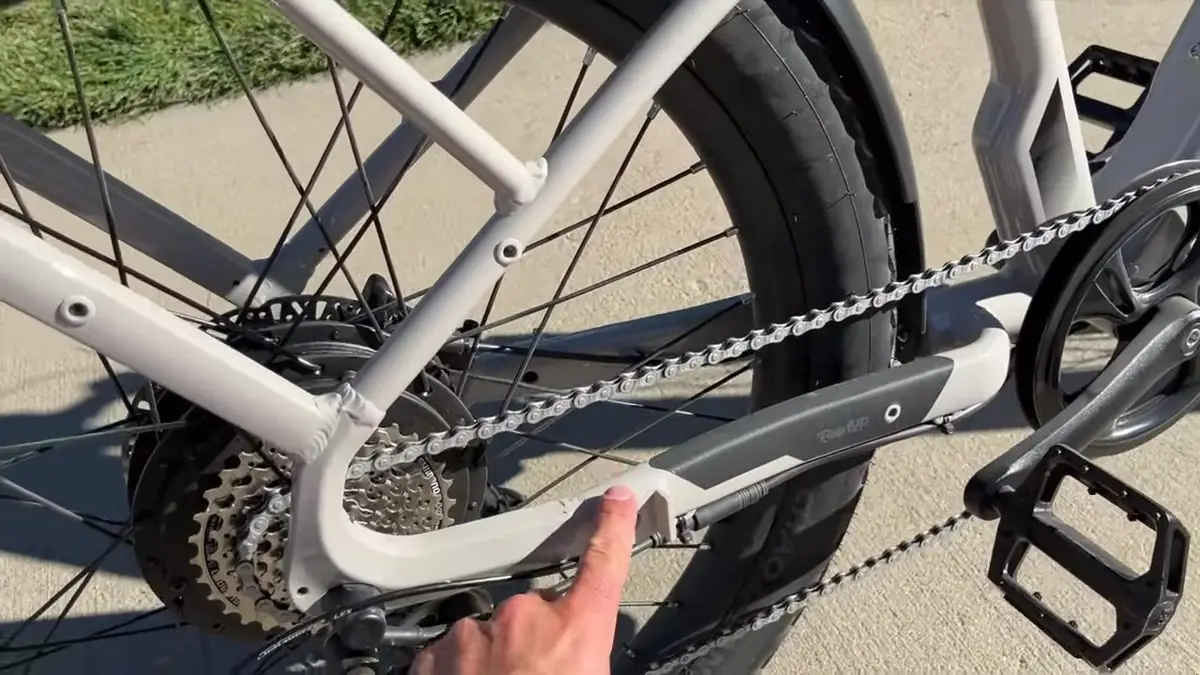
If you want a comfortable beach-cruiser-style commuter with a rear rack, the Ride1Up Cafe Cruiser is hard to beat for the price. Read my Ride1Up Cafe Cruiser review.
$1,395 · 750 W · 720 Wh
Commuting and errands
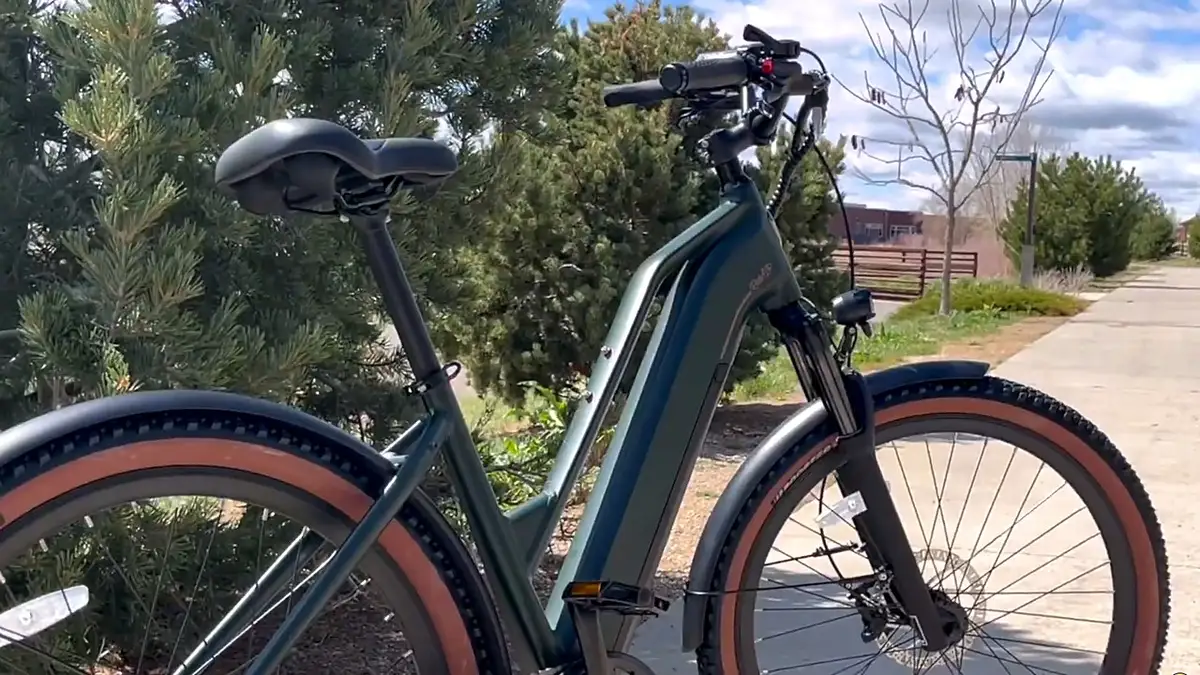
A simple, comfortable Class 3 commuter with a 750W motor, hydraulic brakes and fenders for well under $1,500. Read my Ride1Up Turris review.
$1,395 · 750 W · 672 Wh · 50 mi rated
Folding and small spaces
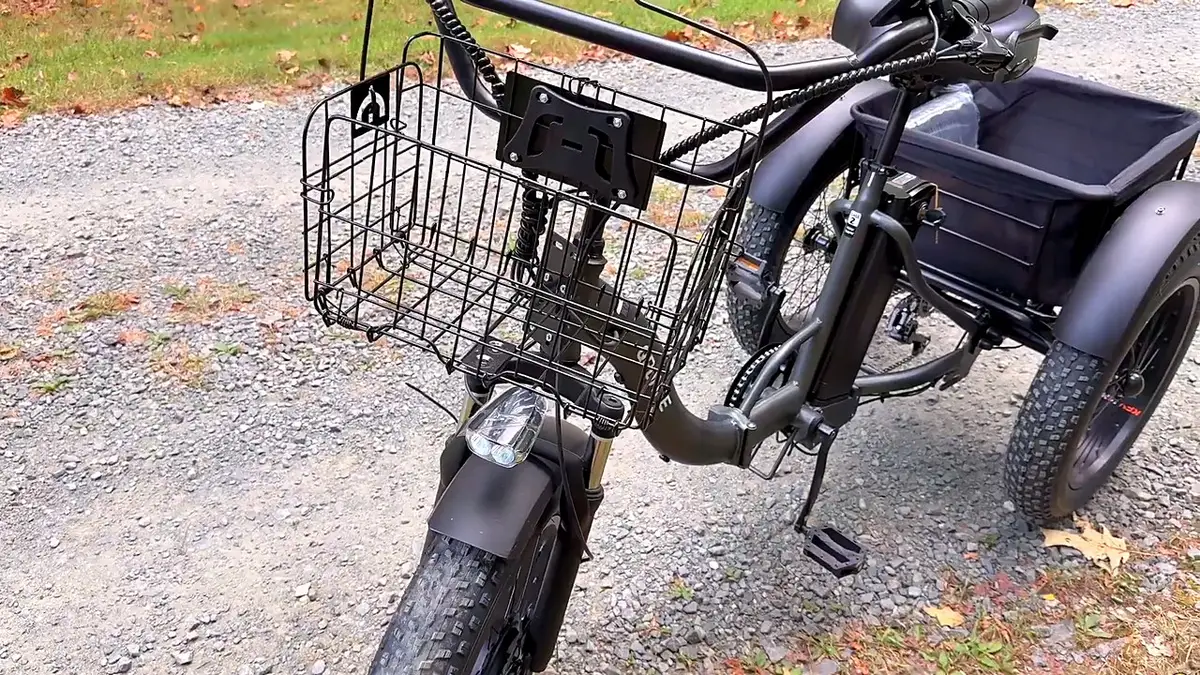
A folding front-drive trike for riders with balance or mobility needs; take turns slowly and expect front-wheel slip on loose climbs. Read my Qronge Lava review.
$899 · 1200 W · 720 Wh · 50 mi rated
Kids and cargo
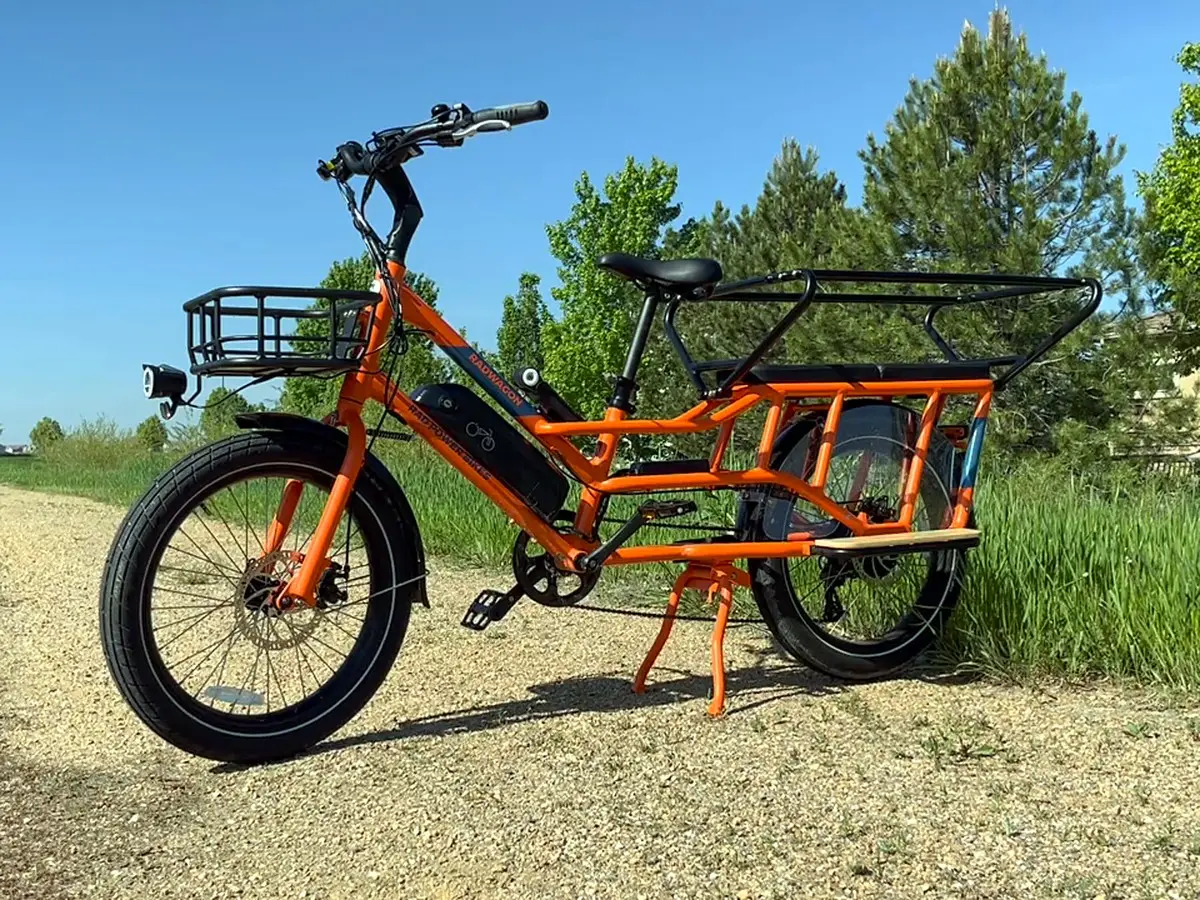
A family cargo e-bike I used for pool runs, school drop-offs, and groceries with two kids on the back. Read my Rad Power Bikes RadWagon 4 review.
$1,299 · 750 W · 672 Wh · 45 mi rated
| Bike | Type | Price | Motor | Battery | Rated range | Max load | Weight | AEB Score | Video |
|---|---|---|---|---|---|---|---|---|---|
| Ainohot Terra | Fat-tire step-through | $799 | 750 W | 624 Wh | 56 mi | 330 lb | 68 lb | 6.8 | |
| Qronge Lava | Folding electric trike | $899 | 1200 W | 720 Wh | 50 mi | 350 + 150 lb | 108 lb | 6.2 | |
| Bee Cool Adventurer | Fat tire | $1,099 | 750 W | 1008 Wh | 80 mi | 350 lb | 78 lb with rack | 6.6 | |
| Rad Power Bikes RadWagon 4 | Cargo | $1,299 | 750 W | 672 Wh | 45 mi | 350 lb total | About 77 lb | 6.1 | |
| Ride1Up Cafe Cruiser | Cruiser | $1,395 | 750 W | 720 Wh | — | 350 lb | 65 lb | 7.1 | |
| Ride1Up Turris | Commuter | $1,395 | 750 W | 672 Wh | 50 mi | 300 lb total | 54 lb | 7.1 | |
| Freesky Ranger Air M-540 | Fat tire | $1,399 | 2000 W | 1200 Wh | 105 mi | 400 lb | 95 lb | 6.8 | — |
| REVR CM7 | Fat-tire step-through / full suspension | $1,399 | 500 W | 864 Wh | 80 mi | 450 lb | 70.84 lb | 7.7 | |
| Aventon Soltera 3 ADV | Commuter | $1,499 | 250 W | 366.8 Wh | 70 mi | 300 lb total | 37 lb | 5.9 | |
| Velotric Discover 2 | Commuter | $1,499 | 750 W | 706 Wh | 75 mi | — | 63 lb | 6.5 | |
| Mokwheel Asphalt | Commuter | $1,499 | 500 W | 706 Wh | 60 mi | 350 lb | 64 lb | 6.5 |
Scroll sideways on a phone. Rated range is the maker's claim. A dash means I couldn't verify that number. Video = when my review went up on YouTube.
Every bike on this page is one I rode and filmed myself (11 bikes, videos from 2021 to 2026). Bikes I haven't ridden are left out. The top pick for each use is the bike with the highest AEB Score in that group that you can still buy. The score comes from the specs (range, motor, brakes and build, practicality) plus the current maker price, so it's the same yardstick for every bike. Specs come from the maker's listing, checked against what I saw on the ride. Prices are from my review data; tap through for the current price. Only bikes with a verified current price of $1,500 or less are on this page. More detail on how I test.
Straight from the downsides I hit in each review. If one of these is a dealbreaker for you, look at the next bike.
Ainohot Terra: skip it if this bothers you: Mechanical brakes Also: Fork bottomed out at 200 lb
Qronge Lava: skip it if this bothers you: Front wheel slips on loose starts/climbs Also: Slow down in turns
Bee Cool Adventurer: skip it if this bothers you: I bottomed out the front fork on rooty trails Also: 78 lbs; harder to handle on single track
Rad Power Bikes RadWagon 4: skip it if this bothers you: The shifter felt cheap to me, and I had to adjust the gears out of the box Also: Mine arrived with something bent in shipping that took some twisting to fix (maybe just my unit)
Ride1Up Cafe Cruiser: skip it if this bothers you: Basic black and white display Also: No rear suspension
Ride1Up Turris: skip it if this bothers you: Tires and crank arms felt a bit cheap Also: No rear tail light on my test bike; Ride1Up now lists one
Freesky Ranger Air M-540: skip it if this bothers you: 95 lb Also: Resets to rear drive each start
REVR CM7: skip it if this bothers you: Heavy Also: Cadence sensor
Aventon Soltera 3 ADV: skip it if this bothers you: Only 250W, so hills on gravel take real effort Also: No throttle
Velotric Discover 2: skip it if this bothers you: Seat post slips unless clamped hard Also: 63 lb
Mokwheel Asphalt: skip it if this bothers you: No rear suspension
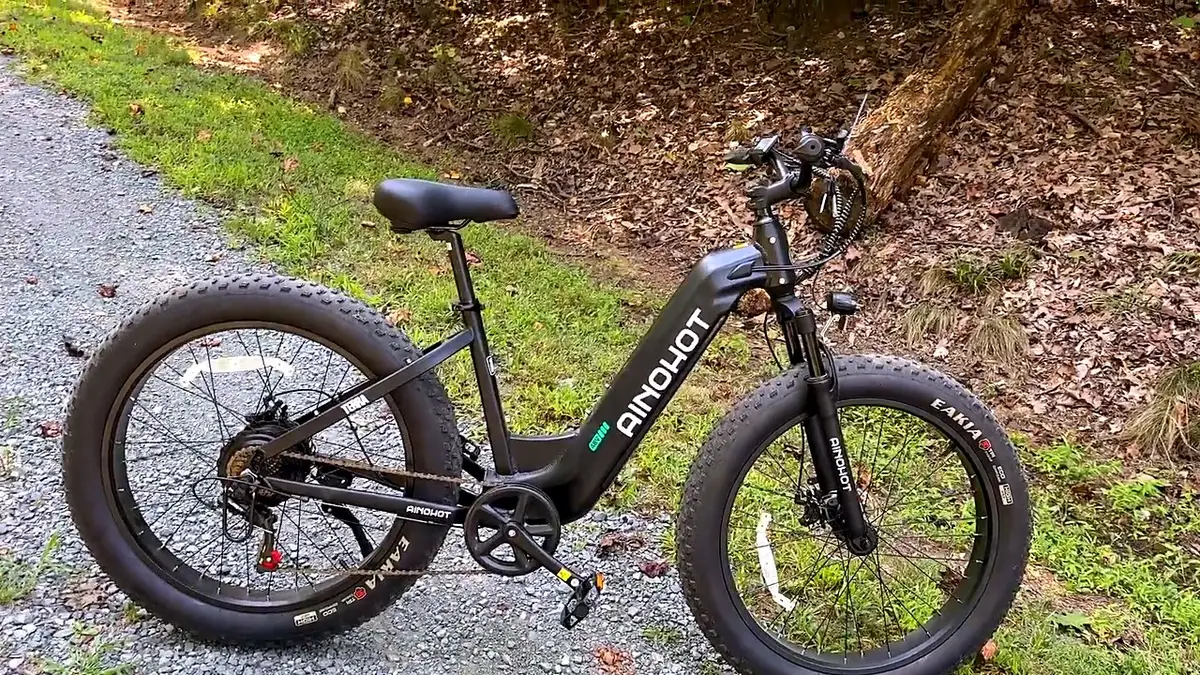
Buy the Terra if you want a low-priced step-through fat-tire bike to share in your household and you ride some gravel or dirt (6:46 to 7:11, 8:10 to 8:27). It uses a 48V system (2:44 to 2:50), the battery comes out to charge (2:34 to 2:54), and the throttle works from zero (1:29 to 1:34). It pulled up a steep grade at full throttle and full assist (3:56 to 4:10). Skip it if you want a mountain bike, hydraulic brakes, or fenders. Ainohot calls it an MTB, but it's a fat-tire bike, not an e-mountain bike (3:05 to 3:35). The brakes are mechanical (0:38 to 0:43), I bottomed out the fork at about 200 lb (1:58 to 2:12), and fenders and a rack aren't included (5:55 to 6:19). The deciding factor: price and a step-through frame versus basic parts. See the Terra at Ainohot ($799 sale, $1,399 regular at ainohot.com as of Oct 23, 2026)
See the Terra at Ainohot. Affiliate link: I may earn a commission at no extra cost to you. Disclosure
Buy the Lava if balance or mobility makes a two-wheeler hard for you. It's a three-wheel trike that stands on its own without a kickstand (6:36 to 6:53). It has a cushy seat with a backrest (4:02 to 4:16), and it carries a lot. There's a front basket bag and a rear cargo area, plus a cover, net, mirrors, lock and tools in the box (1:20 to 1:45, 5:48 to 6:20). Skip it if you want to ride fast or corner hard. You have to slow down in turns so it doesn't tip (4:26 to 4:42), and Qronge caps it at 15 mph. Also skip it if you'll climb loose gravel. The front-drive wheel slipped on me on a gravel incline (6:55 to 7:06). The deciding factor: stability versus traction. It felt stable on flat gravel (4:52 to 5:16), but with the motor in the front wheel, the front tire can spin when you start or climb (3:17 to 3:34). It wasn't for me, but I'd point riders with mobility issues to it (6:36 to 6:53). See the Lava at Qronge ($899.99 in red or grey, $999.99 in light green, on qronge.com as of Oct 23, 2026)
See the Lava at Qronge. Affiliate link: I may earn a commission at no extra cost to you. Disclosure
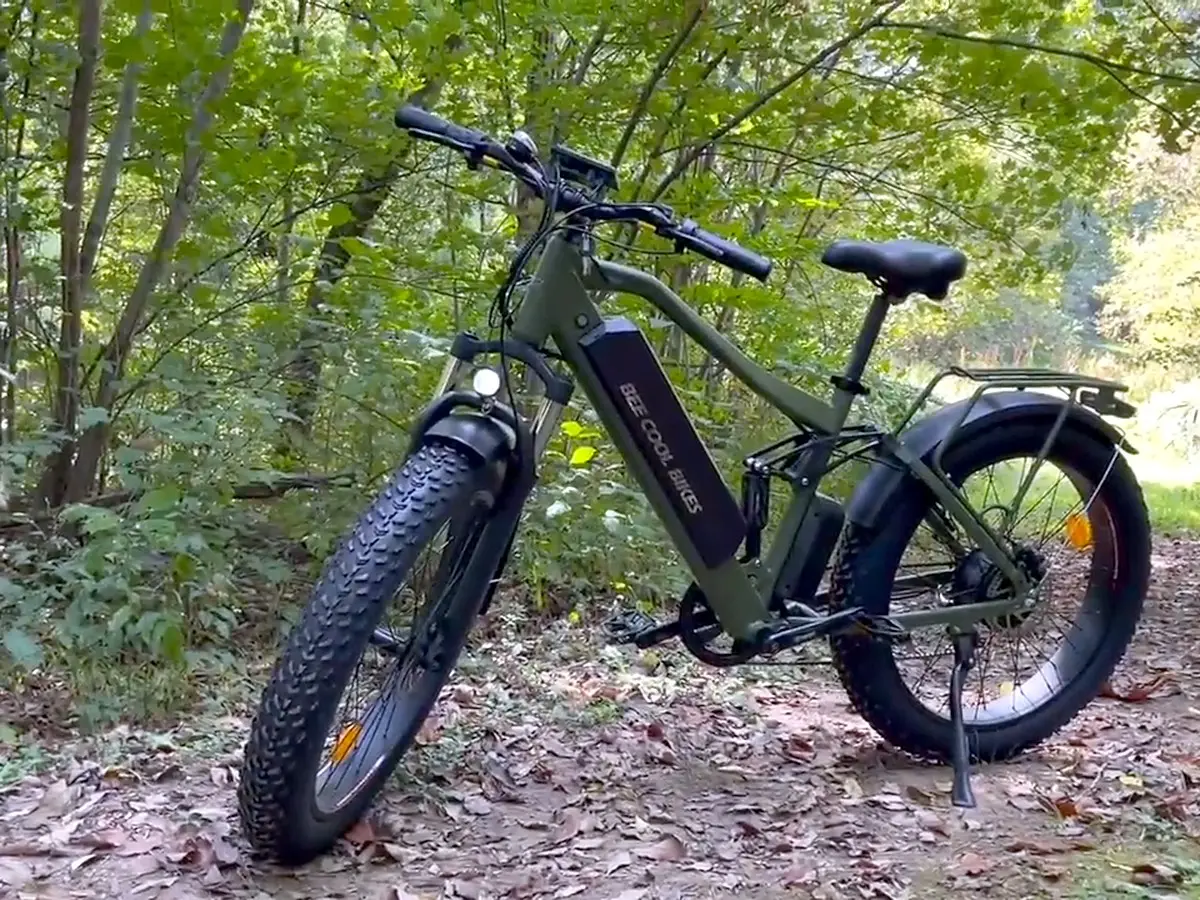
Buy the Bee Adventurer if you want a dual suspension fat tire e-bike with a throttle, a rear rack and a full set of safety lights for a lot less than most full-suspension bikes. I tested mine for several weeks on roads, paved trails and rough walking trails. It was one of the most comfortable rides I'd had at the time.
See it at Bee Cool. Not an affiliate link.
I've been using the RadWagon 4 to take the kids to the pool, run around town, and hit the grocery store, and hopping on it and getting rock star parking everywhere is phenomenal. The low center of gravity makes it stable with a full load, and I had zero safety concerns with the new in-house tires on-road or off. The parts aren't perfect out of the box, but for family hauling it delivers.
See the RadWagon at Rad. Not an affiliate link.
If you want a comfortable beach-cruiser-style commuter with a rear rack, the Ride1Up Cafe Cruiser is hard to beat for the price. I tested it for several weeks and put about 20 to 30 miles on it. The 750W Bafang rear hub motor got me (about 200 lb) up hills, the 3 inch tires and wide seat are comfortable, and it comes with an integrated headlight and tail light, fenders, a super-duty rear rack and hydraulic disc brakes. When I reviewed it, it was $1,195 on Ride1Up's site, down from almost $1,600. The small gripes: the display is a simple black and white unit, there's no rear suspension, and I wish the chain slap guard had been integrated instead of added on. My testing was limited to 20 to 30 miles, so I can't speak to long-term durability from my own riding.
See current Ride1Up bikes. Affiliate link: I may earn a commission at no extra cost to you. Disclosure
I rode the Turris for several weeks and called it a fantastic e-bike that offers exceptional value at its price. The 750W motor accelerates well, the hydraulic brakes are reliable, and the fenders and upright position make it an easy commuter. Some parts, like the tires and crank arms, felt a bit cheap, and my test bike had no rear tail light (Ride1Up now lists one).
Check Ride1Up. Affiliate link: I may earn a commission at no extra cost to you. Disclosure
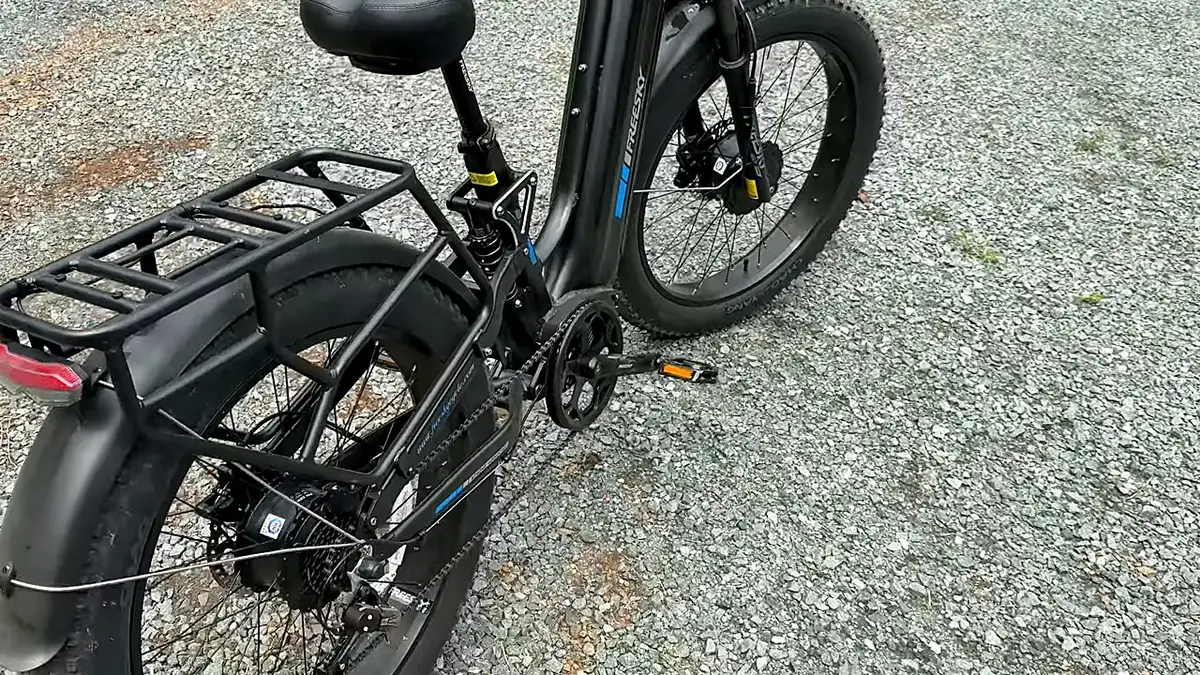
Buy the Ranger Air M-540 if you want a dual-motor step-through for steep hills. The front motor pulled me up steep inclines, and I said it has plenty of power. It also has a fork plus a rear shock, hydraulic brakes and a throttle that works from a stop. I tested it for several weeks. Skip it if you need to lift your bike. Freesky lists it at 95 lb. Also skip it if you want dual motor all the time without pressing a button. It starts in rear-wheel drive every time.
See the Ranger Air at Freesky. Affiliate link: I may earn a commission at no extra cost to you. Disclosure
Buy the REVR CM7 if your commute mixes pavement with dirt or gravel and you want a soft ride. It has a front fork and a rear shock (2:18 to 2:47), Zoom hydraulic disc brakes on both wheels (0:56 to 1:10, 2:08 to 2:12), and knobby fat tires that held traction on dirt slopes in my testing (3:50 to 4:09). I said it suits a medium to long commute with some gravel on the way (4:47 to 5:03). Skip it if you want a light bike or a torque sensor. It's a heavier e-bike because of the fat tires and rims (4:28 to 4:37), and it uses a cadence sensor with a crankset that didn't feel as smooth as some others (2:55 to 3:07). REVR lists 70.84 lb. The deciding factor: comfort and brakes versus weight. If you carry it up stairs, look elsewhere. See the CM7 at REVR (REVR's current CM7s showed $1,399 in search results on Oct 23, 2026; confirm at checkout)
See the CM7s at REVR. Affiliate link: I may earn a commission at no extra cost to you. Disclosure
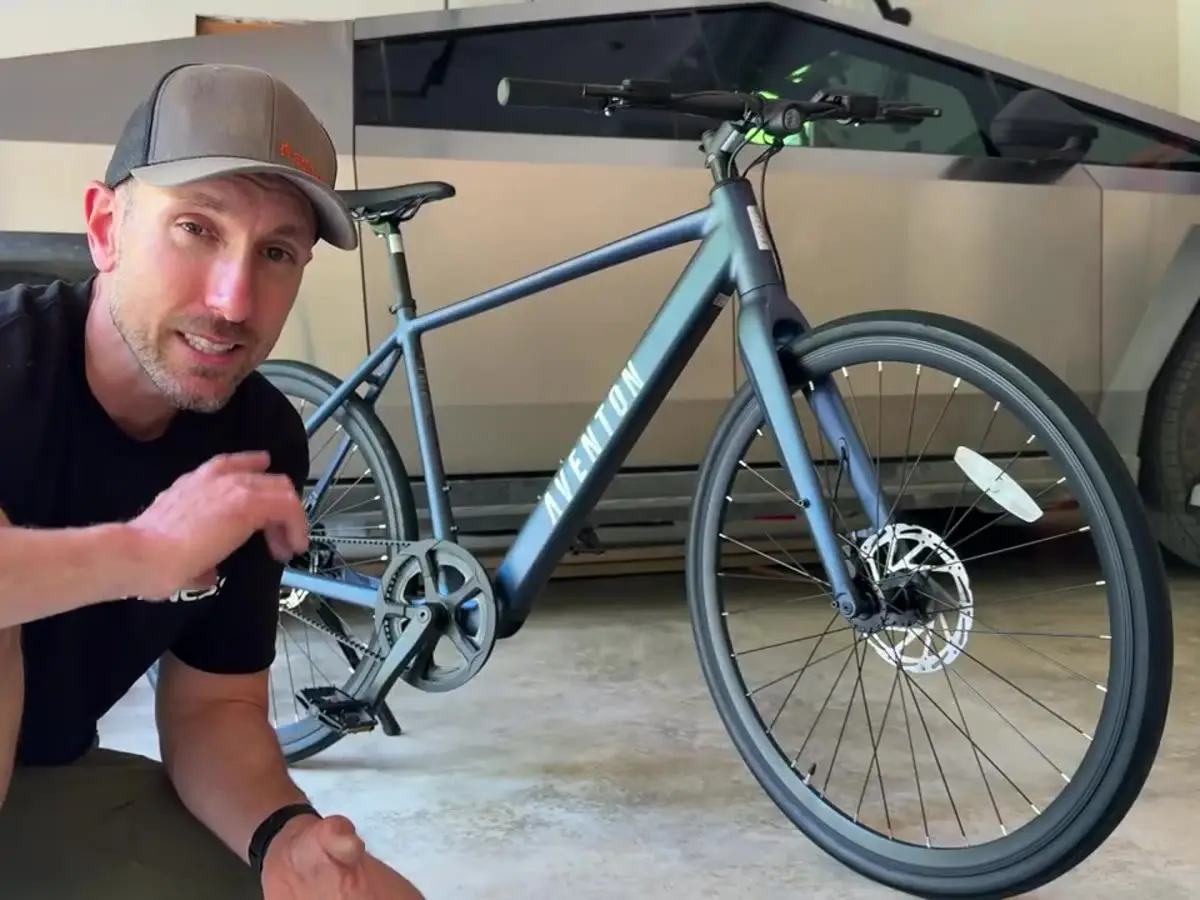
If you ride on pavement and want a super light, simple e-bike that looks incredible, the Aventon Soltera 3 ADV is an easy recommendation. I tested it for several weeks. It's belt driven, single speed, Class 1, with no throttle and no suspension. On a paved path it's incredibly nice to ride, and the styling is on point. If you ride gravel or dirt, or you want a throttle, look elsewhere. When I took it onto gravel up a slight incline, even in turbo I had to pedal pretty hard.
Check the Soltera 3 ADV. Affiliate link: I may earn a commission at no extra cost to you. Disclosure
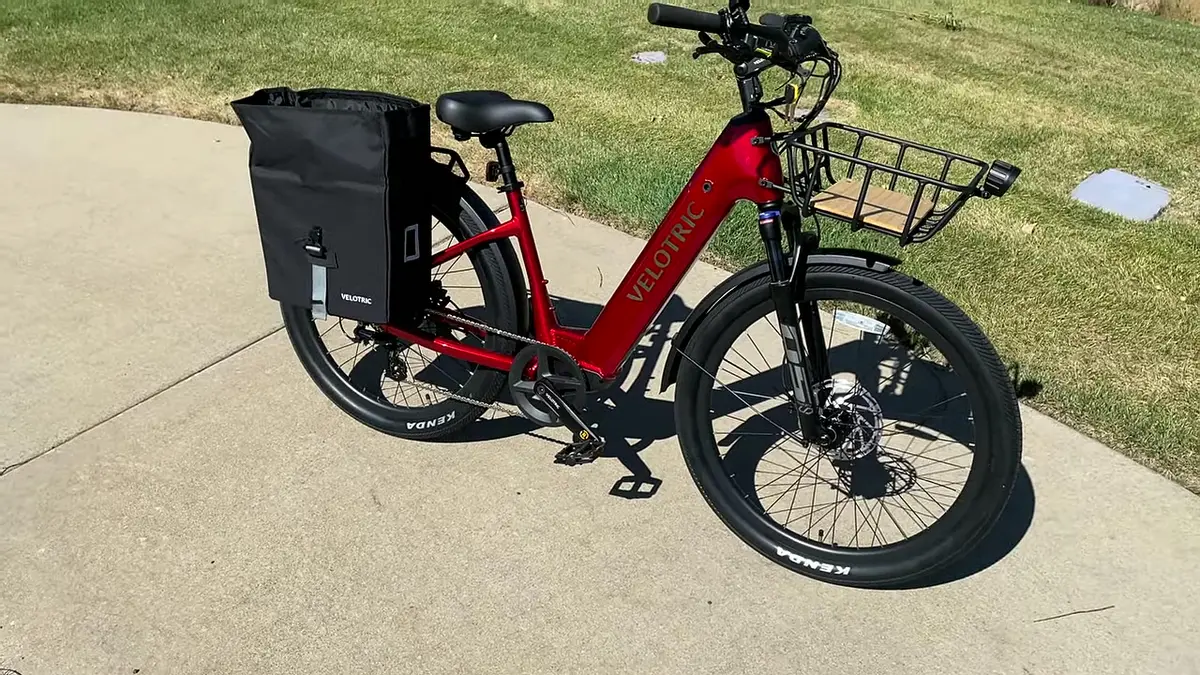
Buy the Discover 2 if you want a comfortable, well-built commuter with real safety features: hydraulic brakes, turn signals, a brake light, and a rack and fenders in the box. You can also switch the pedal assist between torque and cadence in the app. I tested it for several weeks. Then I rode just under 30 miles of rough gravel and paved paths as a torture test. My conclusion was that it really is a very high-quality e-bike (0:40 to 1:03, part 2). Skip it if you need a lighter bike, or if you want to change your seat height often without tools. The seat post slipped on me until I clamped it so tight that it took two hands to move (4:11 to 4:30, part 2).
See the Discover 2 at Velotric. Affiliate link: I may earn a commission at no extra cost to you. Disclosure
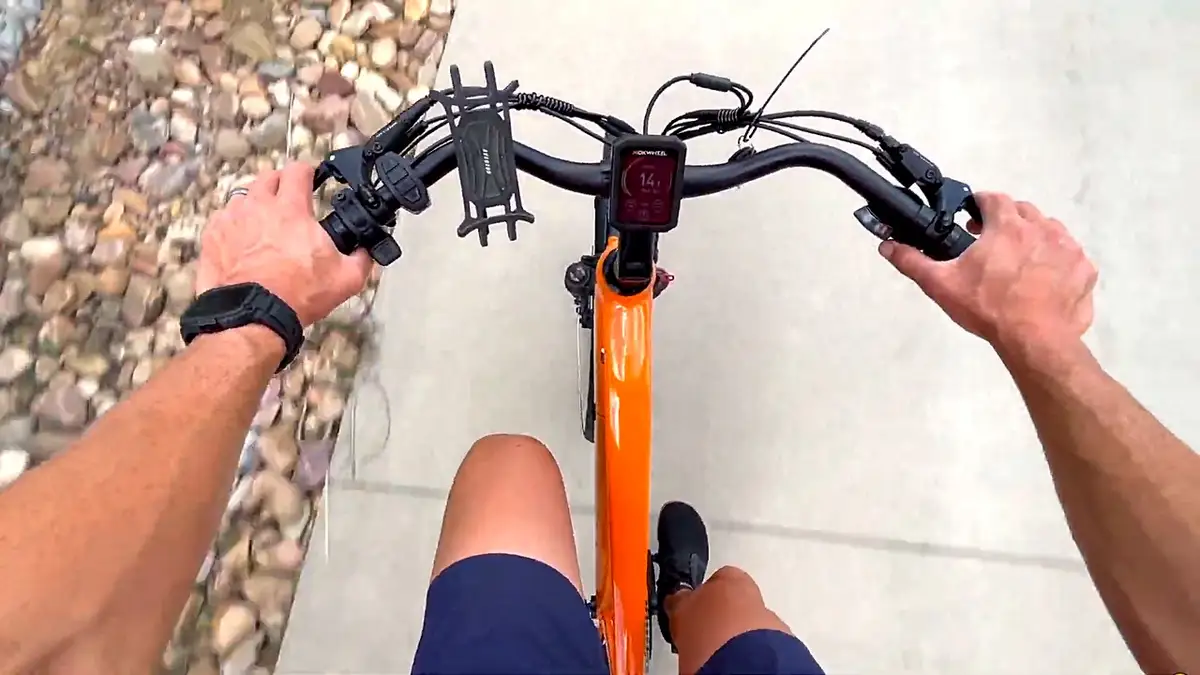
Buy it if you want a full-size commuter with a torque sensor, hydraulic brakes, a thumb throttle, and a rack and fenders already on it. That's what I rode for several weeks (0:06 to 0:09, 0:55 to 1:15, 6:48 to 7:15). At about 6'1" and 200 lb, it fit me perfectly (1:18 to 1:23). Skip it if you ride rough trails. It has a front suspension fork and no rear suspension. I said it's completely fine on paved paths (1:46 to 1:58). The deciding factor: price. I said at about $1,500 it's a fantastic deal if you catch it on sale (7:15 to 7:23). As of Oct 28, 2026, Mokwheel lists it at $1,499.99, on sale from $1,799.99 (Mokwheel). See the Mokwheel Asphalt ($1,499.99 as of Oct 28, 2026)
See the Mokwheel Asphalt. Affiliate link: I may earn a commission at no extra cost to you. Disclosure
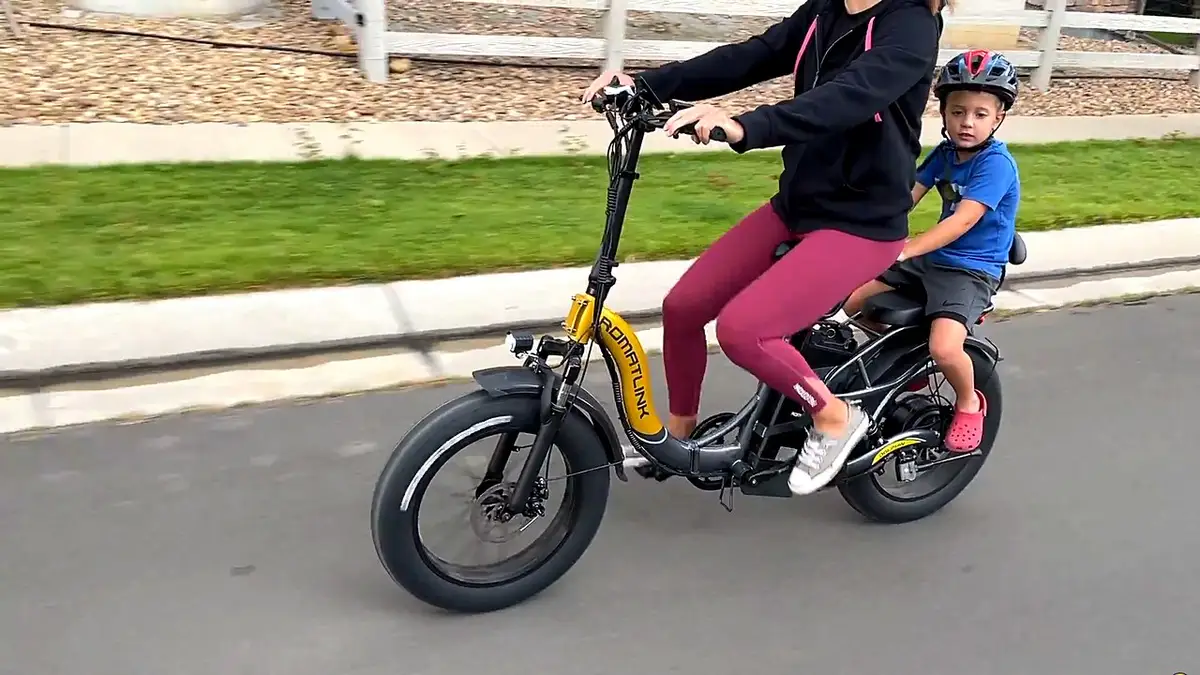
Buy the Dolphin if you want a full-suspension, passenger-ready e-bike that folds, and you care more about range than weight. I rode it for several weeks. It became our daily driver for taking the kids to school. The 48V 30Ah Samsung battery is the reason to buy it. We rode 25 miles and the display still showed 100%. Skip it if you have to lift your bike often, or if you want hydraulic brakes or a torque sensor. It weighs 93 lb. That's one of the heaviest bikes I've tested. It has mechanical disc brakes that take a hard squeeze at speed. The pedal assist uses a cadence sensor, not a torque sensor.
See the Dolphin at Romatlink. Affiliate link: I may earn a commission at no extra cost to you. Disclosure
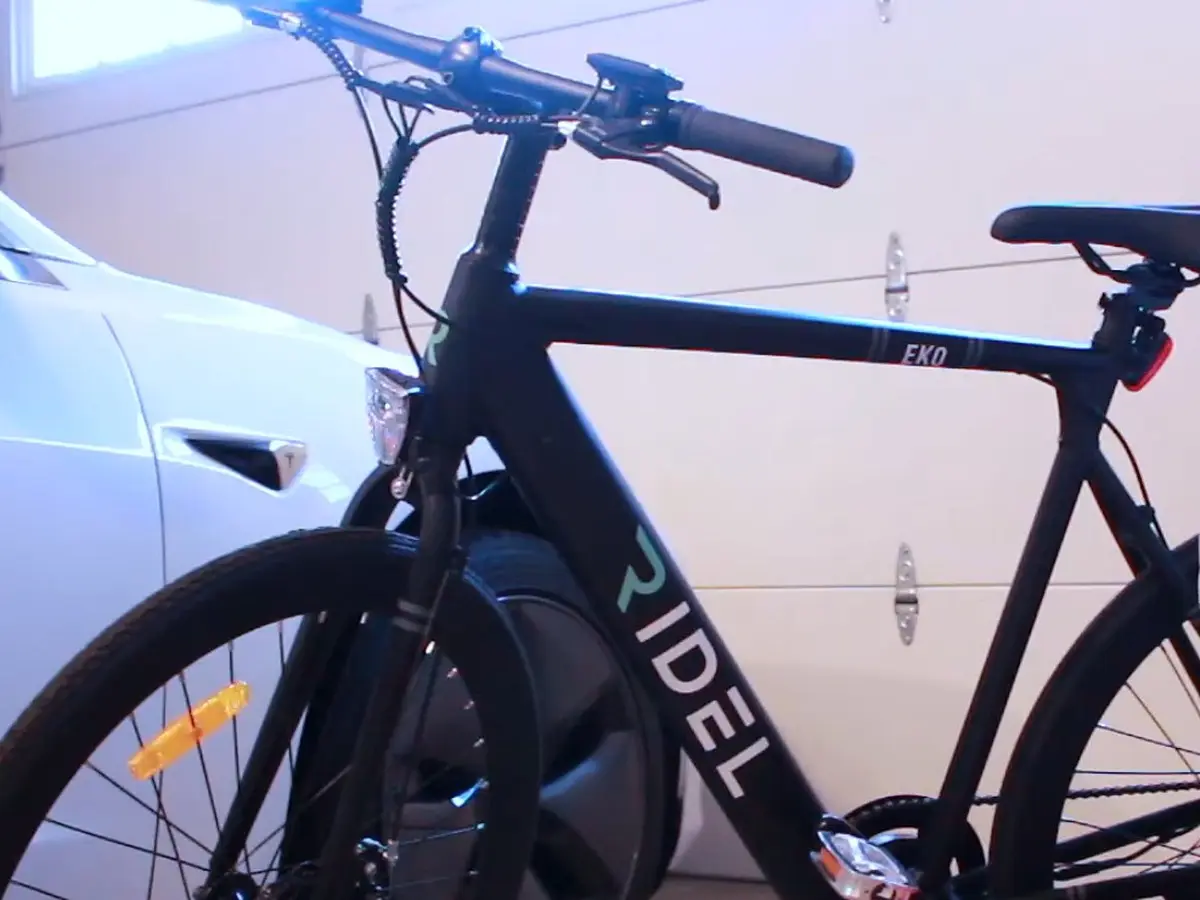
If you want a super light, low-maintenance e-bike for pavement that looks just like a regular single speed bike, the Ridel EKO is an awesome pick. I rode it for over 30 miles. It's so light you can carry it up apartment stairs, the torque sensor gives you an almost instant start, and when I showed it to friends they didn't realize it was an e-bike. Know the trade-offs before you buy. There's no throttle, the battery is fixed in the frame, the tires are very thin, and it's not for off-road riding.
See the EKO at Ridel. Not an affiliate link.
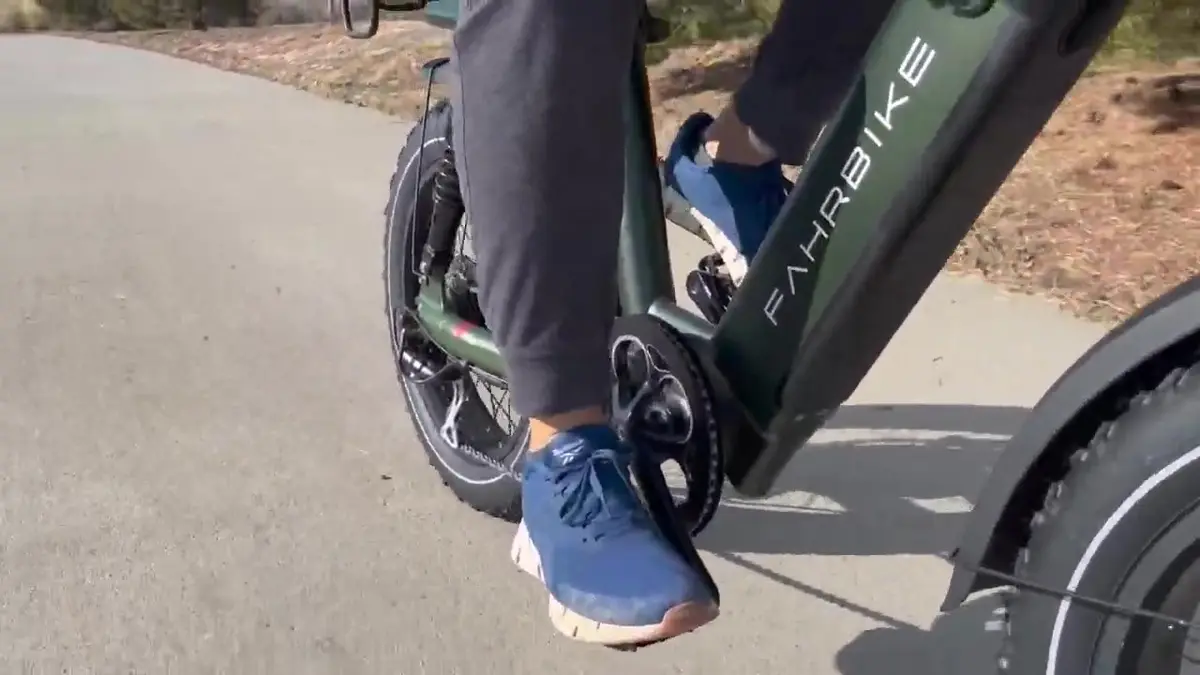
If you want a moped-style e-bike under $2,000, the Fahrbike Roadster 73 is the one I'd buy. I tested it for several weeks. It was listed at $1,399 when I reviewed it, and I think that's a steal for what you get: fat tires, oversized dual front and rear shocks, a Samsung battery that went 42 miles for me in winter, an integrated headlight and tail light, and a plush moped seat. Know what you're buying: it's a throttle bike. At about 6'1" and 200 lb, pedaling it was almost comical, because the seat doesn't go high enough for my legs. I also found two flaws on my bike: the chain rubs the rear tire in the two highest gears, and the tail light wiring arrived frayed.
Check Fahrbike. Affiliate link: I may earn a commission at no extra cost to you. Disclosure
The list above includes every tested bike with a verified price under the line. This section is my take on the ones I'd shortlist.
Every bike on this page is one I rode and filmed myself, and every one had a listed price of $1,500 or less when I checked the brand sites on Oct 26, 2026. I’m 6’1” and about 200 lb, I live on a hilly property with a lot of gravel, and most of these bikes spent several weeks with me before I filmed the review. Where I measured something on camera, I give you the timestamp so you can watch it yourself. Where I didn’t, the page says “not tested” and gives you the brand’s number with the link.
One thing up front: I only ran a full range test on one of these six, the Engwe EP-2 Pro. The other five are not range-tested, so their range numbers below are the brands’ own claims.
Prices are from each brand’s own product page, checked Oct 26, 2026 (ET). Specs are the brands’ published numbers unless I say otherwise. “My video” means I said it on camera and the brand page didn’t show it.
| Bike | Price (Oct 26, 2026) | Motor | Battery | Weight | Class | Suspension | Rider height (brand) | Frames sold | My range result |
|---|---|---|---|---|---|---|---|---|---|
| Velotric Discover 2 | $1,499 (sale from $1,999) | 750W, 75 Nm | 705.6 Wh | 63 lb | 1, 2 or 3 (20 mph default) | 80 mm fork | 4’11” to 5’9” (Regular), 5’6” to 6’4” (Large) | Step-through (what I rode); Velotric’s page I captured doesn’t confirm other frames | Not tested; about 30 mi ridden |
| Ride1Up Turris | $1,395 | 750W, 90 Nm | 48V 14Ah | 54 lb | Class 3 with a 20 mph throttle | 100 mm fork | 5’1” to 6’2” | Step-through (ST) and step-over (XR) | Not tested |
| Mokwheel Asphalt | $1,499.99 (sale from $1,799.99) | 500W continuous | 48V 14.7Ah | 64 lb | 2/3 | Front fork | 5’6” to 6’6” | Step-over and step-through | Not tested |
| Freesky Ranger Air M-540 | $1,399 | 2 x 2000W peak | 48V 25Ah | 95 lb (90 lb in spec table) | Freesky doesn’t list a class; 34 mph listed | 120 mm fork, 180 mm rear shock | 5’3” to 6’8” | Step-through | Not tested |
| REVR CM7s | $1,399 | 500W (1100W peak) | 864 Wh | 70.84 lb | 2 throttle, 28 mph assist | Fork and rear suspension | 5’2” to 6’2” | Step-through and step-over | Not tested |
| Engwe EP-2 Pro | $1,399, sold out | 750W (my video) | Engwe doesn’t list it (sold out page) | Engwe doesn’t list it (sold out page) | 20 mph throttle, 28 mph PAS 5 (my video) | Front fork | Engwe doesn’t list it | Folding | 23 mi, throttle only |
Two notes on that table. Mokwheel’s page for the Asphalt lists the price as $1,499.99, so it squeaks in under the line by a penny. The Freesky is covered in its own section below.
Here’s exactly what I did:
I didn’t score them with a formula.
What I can’t tell you is how far each one goes on a charge. Range depends on rider weight, hills, assist level and temperature. Treat every range figure except the EP-2 Pro’s as the brand’s claim.
Watch my Discover 2 review · Read the full review
The Discover 2 is probably my third or fourth Velotric (6:57), and of the six bikes here it comes with the most included gear and the longest warranty. The 750W rear hub uses a torque sensor (3:58), and Velotric lets you change how the sensor feels, so it can behave more like a cadence bike if you want that instant push (4:06). I said the front fork gave enough suspension for commuting on paved paths and fine gravel (6:31 to 6:40). It has eight gears in the rear and a single ring up front (6:48).
What sets it apart at this price is the kit. Velotric’s box includes the battery, charger, front light, display, fenders, rear rack, reflectors, bell, kickstand, pedals and an assembly toolkit. The bike has Apple Find My built in. Velotric lists 63 lb, a 440 lb max load and a 66 lb rack rating (velotricbike.com, checked Oct 26, 2026).
What I measured: about 30 miles of riding before my follow-up video. That is a ride distance, not a range test. Velotric claims up to 75 miles on pedal assist and 60 on throttle, for a 187 lb rider in PAS 1 on flat ground.
What I’d change: the seatpost. In my follow-up video I said it kept sliding down on me until I cranked the clamp very tight, and then it took two hands to adjust (4:11 to 4:30). I’d like to see some texture on the post. Also, the $1,499 price is a sale from $1,999. If the sale ends, the Discover 2 drops off this list.
Fit and frame: Velotric lists Regular for 4’11” to 5’9” and Large for 5’6” to 6’4”. The bike I filmed was the step-through (first video, 0:33).
Warranty and returns: 5-year frame, 2 years on battery and electrical, 1 year on everything else. Register within 60 days and Velotric extends the frame to 10 years and the battery and electrical to 3 years (velotricbike.com/pages/warranty, checked Oct 26, 2026). Returns are 14 days with a restocking fee: $200 if unused, 22% if used (velotricbike.com/pages/return-refund-policy, checked Oct 26, 2026).
Dealers and service: Velotric’s product page says “1,600+ Dealer Shops” (Discover 2 page, checked Oct 26, 2026), so this is the easiest bike here to find in a shop.
Who it’s for: someone who wants one bike to commute, run errands and ride paved and gravel paths, and who wants lights, rack and fenders without buying extras.
Watch my Turris review · Read the full review
The Turris is the lightest bike here at 54 lb, per Ride1Up, and that’s a real difference if you carry your bike up steps or lift it onto a car rack. It’s a Class 3 with a 20 mph throttle: pedal assist runs to 28 mph (2:21), and Ride1Up lists the left thumb throttle at 20 mph. The hydraulic disc brakes (2:37) are a step up from what some bikes in this price range use.
It isn’t perfect. On camera I said the tires and crank arms felt a bit cheap (2:49). My test bike had no rear tail light. I said I’d add one for safety and that most e-bikes at or a bit above this price come with one (3:56 to 4:14). Ride1Up’s product page now lists a rear brake light (ride1up.com/product/turris/, checked Oct 26, 2026), so check what ships with yours. The rack is sold separately, and Ride1Up doesn’t list its price.
On range: I said that after 25 miles on an e-bike, I’m ready to be done (2:02 to 2:07). Ride1Up claims 30 to 50 miles from its 48V 14Ah battery. I didn’t range-test it.
Price: $1,395 on Ride1Up’s site on Oct 26, 2026, with no sale price shown. When I filmed, the price was $1,295 (0:33).
Fit and frame: Ride1Up lists a 5’1” to 6’2” rider height and sells a step-through (ST) and a step-over (XR) frame.
Warranty and returns: 1 year, original owner, defects only. Parts and labor for 30 days, then parts only (ride1up.com/warranty-info/, checked Oct 26, 2026). Returns within 30 days if the bike has under 20 miles, with a $250 fee if you cancel during or after shipping (ride1up.com/return-and-pre-order-policy/, checked Oct 26, 2026).
Dealers and service: Ride1Up sells direct. Its FAQ says dealer test rides cost “a premium,” and it suggests professional assembly.
Who it’s for: a rider under 300 lb who wants the lightest bike here, doesn’t need a rack in the box and can live with a 1-year warranty.
If you’re stuck between these two, I compared them head to head in Velotric Discover 2 vs Ride1Up Turris.
Watch my Asphalt review · Read the full review
This is my third or fourth Mokwheel (0:19), and the fit and finish were better than the Basalt I tested early on (3:40). It ships as a Class 2 bike, ready to ride (0:47 to 0:50). Mokwheel’s page now lists it as Class 2/3. At 6’1” and 200 lb, it fit me perfectly (1:18 to 1:20). Mokwheel’s page says the Asphalt is “designed for taller riders” and lists a 5’6” to 6’6” rider height, with step-over and step-through frames (mokwheel.com/products/asphalt, checked Oct 26, 2026).
It’s a commuter first. It has integrated rear tail lights (1:32), hydraulic disc brakes (1:12), fenders and a rack. There’s only a front fork, which I said is fine if you’re mostly on paved paths (1:48 to 1:54). The full-color display stayed readable in direct sunlight (3:13), and it has a thumb throttle (3:02) and seven gears (3:26).
The detail I keep thinking about is the kickstand. Mokwheel tucked it closer to the rear axle (2:00), and that let me hang the bike on my Steadyrack even with the fender on (2:10 to 2:14). Small thing, but if you store bikes on a wall, it matters.
Then there’s the torque sensor. I explained in the video why I prefer a torque sensor over a cadence sensor (6:52 to 6:54): the motor responds to how hard you pedal, so it feels more like a regular bike. The Asphalt and the Discover 2 are the only bikes on this list with one.
Price: $1,499.99 on Mokwheel’s site, on sale from $1,799.99 (Oct 26, 2026). In my video I quoted roughly the same sale price (6:40).
Specs (mokwheel.com, Oct 26, 2026): 500W continuous, 860W peak, 48V 14.7Ah, 64 lb, 27.5 x 2.4 in tires, Tektro TKD171 hydraulic brakes, 350 lb payload, 50 to 60 miles claimed.
Warranty and returns: 2-year warranty, 15-day returns, as shown on the product page (mokwheel.com/products/asphalt, checked Oct 26, 2026). I didn’t find the full terms on that page.
Dealers and service: Mokwheel’s site has a “Find A Dealer” page and says you can test ride at dealers across the US.
Who it’s for: a taller rider commuting mostly on pavement who wants a torque sensor and doesn’t need rear suspension.
Watch my Ranger Air review · Read the full review
The Ranger Air is the outlier here: two motors, full suspension and a 48V 25Ah battery, all at $1,399. The front motor is what you’re paying for. On camera I said the front tire will pull you up a steep incline (1:40 to 1:43), and that is the one thing no other bike here does. With the fork and rear shock together, the ride was super smooth (1:46 to 1:51). It’s an easy step-through model (1:52).
Two things bugged me. First, you unlock it with a passcode or an NFC smart card (0:41). That’s a nice anti-theft touch, but the bike starts in rear-wheel drive mode (0:50), and I wish there were a way to keep it in dual-motor mode (1:03). You have to switch it on every ride. Second, the turn signals are a little gimmicky (2:04).
It’s also heavy. Freesky lists 95 lb on one part of the page and 90 lb in the spec table. Either way, this isn’t a bike you lift onto a car rack alone.
About the speed: Freesky lists a 34 mph top speed and doesn’t list an e-bike class on the page I checked. Many state e-bike laws stop at 28 mph (Class 3), so a bike that goes 34 mph may not count as an e-bike where you live. It could be treated as a moped or motor vehicle, with registration or license rules. Look up your state on the laws page and read e-bike classes explained before you take it on a bike path or trail.
Specs (freeskycycle.com, Oct 26, 2026): dual 2000W peak hub motors, 105 Nm each, 48V 25Ah IPX7 battery, cadence sensor, 26 x 4 in fat tires, 180 mm 4-piston hydraulic brakes, 120 mm fork, 180 mm coil rear shock, 400 lb max load, 60 to 105 miles claimed.
Fit and frame: step-through only, with a listed 5’3” to 6’8” rider height.
Warranty and returns: for orders on or after Nov 13, 2025, 24 months on the motor, battery and controller and 12 months on other parts, for the original buyer, and only if you bought from freeskycycle.com. Amazon and shop purchases follow the seller’s policy. 15-day returns (freeskycycle.com/products/ranger-air-m-540, checked Oct 26, 2026).
Dealers and service: Freesky’s site has a “Find a Dealer” link. Since the warranty only covers direct orders, I’d buy direct.
Who it’s for: a rider on steep, loose ground who cares more about climbing than about weight or legal-class simplicity.
Watch my CM7 review · Read the full review
The parts that stood out on the REVR fat tire step-through were the brakes and the suspension. REVR used Zoom hydraulic disc brakes (0:58), a name brand I was happy to see. With a big front fork and rear suspension, it felt like floating on a cloud on dirt and gravel (2:45). The knobby tires held traction on dirt, including on a slope (3:50 to 4:00).
That’s also where I said the high-end feel stops. The crankset didn’t feel as smooth as others, and it’s only a cadence sensor (3:00). I’d like to see a torque sensor at this price. It’s a Class 2 bike with a 500W rear hub motor (3:11), and REVR offers an extra battery that slides in at the back (3:23), though my demo bike didn’t have it.
It’s a heavier e-bike (4:29), mostly because of the fat tires and rims. REVR lists 70.84 lb. I still said it’s great for a medium to long commute with some gravel along the way (4:49).
A naming note: I reviewed the CM7. REVR’s current listing is the “City E-Bike CM7s.” REVR’s CM7s page doesn’t say what changed from the CM7, so here’s what I can and can’t confirm. Same: 500W rear hub (my video, 3:11), Zoom hydraulic brakes (0:58), step-through frame. Different on paper: REVR lists 28 mph assist for the CM7s, while I called the CM7 a Class 2 bike in my video (3:11). Unknown: whether the battery, frame or anything else changed. If that matters to you, ask REVR before you buy.
Price: $1,399 for the CM7s on REVR’s site (Oct 26, 2026).
Specs (revrbike.com, CM7s, Oct 26, 2026): Bafang 500W, 1100W peak, 864 Wh 48V 18Ah, 20 mph throttle and up to 28 mph assisted, Kenda 20 x 4 in tires, ZOOM 180 mm hydraulic brakes, 450 lb payload, 80 miles claimed, 9-hour charge.
Fit and frame: REVR lists 5’2” to 6’2” and sells step-through and step-over versions.
Warranty and returns: 2-year warranty. Returns within 15 days of delivery for non-defective items (revrbike.com CM7s page, checked Oct 26, 2026).
Dealers and service: REVR doesn’t list dealers on the page I checked. Plan on direct support by mail.
Who it’s for: a rider who wants the softest ride on this list and a step-through frame two people of different heights can share (4:24).
Watch my EP-2 Pro review · Read the full review
On Oct 26, 2026, Engwe’s US site listed the EP-2 Pro at $1,399, with every color marked unavailable. I’m keeping it on the list because it’s the only bike here I range-tested, and because it folds.
I rode it for about two weeks (0:15) and did a max range test and got 23 miles on a full charge, down to zero (7:51). Those 23 miles were full throttle with no pedaling, at about 200 lb, on ground with a good amount of hills. The bike is rated for no more than 300 lb (8:08). If you pedal, you’d expect more range, but I didn’t test that.
It folds in half, and I fit it in the trunk of my Model 3 (2:11). Folding or unfolding took me about 30 seconds (6:39, 7:33). It came fully assembled in the box (6:19). It’s still pretty heavy to handle (5:24), so “folding” doesn’t mean “light.”
On power, the 750W motor pulled me fine up and down hills, but starting on an incline felt a little slow (2:36 to 2:48). On the throttle it reaches 20 mph, and in PAS 5 I reached 28 mph with moderately aggressive pedaling (8:50 to 9:11). In my video I also said the fork was “pretty good, definitely not super high quality” (1:42 to 1:56), and the brake had no problem stopping me at about 200 lb (8:43 to 8:48). I didn’t say on camera whether they’re hydraulic or mechanical.
Price history: when I filmed, it was about $1,100 on Amazon with a $100 coupon (9:35). Today Engwe lists $1,399 and sold out.
Warranty and returns: Engwe’s warranty page lists 12 months on the frame and on most electrical parts and the motor, with shorter terms on wear parts (us.engwe.com/pages/warranty, checked Oct 26, 2026). Returns are 30 days from delivery (us.engwe.com/policies/refund-policy, checked Oct 26, 2026).
Dealers and service: Engwe’s site has a “Find a dealer near me” link.
Who it’s for: someone who has to fit a full-size e-bike in a sedan trunk. If it stays sold out, see my best folding e-bike guide for other picks.
Answer these three questions and the list narrows fast.
Will you ride mostly on pavement? Then you want the Discover 2, the Turris or the Asphalt. All three use 27.5 in tires and front forks only, and all three weigh under 65 lb. Pick the Discover 2 for the most included gear and the longest warranty. Pick the Turris if weight and speed matter most. Pick the Asphalt if you’re tall: it has the highest listed rider height of the three (6’6”) plus a torque sensor.
Do you have steep, loose hills? Then the Freesky’s second motor is the feature that earns its 95 lb. It’s the only bike here with a front motor, and that’s what pulled me up a steep gravel incline in my review. If you can live with a single motor, the REVR also has full suspension and weighs 70.84 lb, per REVR.
Do you need to fit it in a car? Only the EP-2 Pro folds, and right now you can’t buy it from Engwe. Check back.
Three of these bikes can run past 20 mph on pedal assist: the Discover 2 (adjustable from 12 to 28 mph), the Turris (28 mph) and the REVR (up to 28 mph assisted). That’s Class 3 territory, and many states keep Class 3 bikes off multi-use paths or set an age minimum. The Freesky’s listed 34 mph top speed is beyond any class. Read Class 2 vs Class 3 and check your state on the laws page before you pick by top speed.
For most people I’d pick the Velotric Discover 2 at $1,499 (Oct 26, 2026). It’s the most complete package for commuting: torque sensor, lights, fenders, rack and the best warranty on this list. Just know the price is a sale from $1,999.
I only range-tested the EP-2 Pro: 23 miles on throttle alone at about 200 lb, on hilly ground. For the rest, the brands claim the Freesky goes 60 to 105 miles and the REVR up to 80 miles. I haven’t verified either.
By the brands’ listed limits, the REVR is highest at 450 lb, then the Discover 2 at 440 lb, the Freesky at 400 lb and the Asphalt at 350 lb. The Turris and EP-2 Pro are rated for 300 lb. I’m about 200 lb, so I haven’t ridden any of these near their limits. If you’re near the top of a range, I’d lean toward the REVR or Discover 2 for the extra margin.
The Discover 2 and the Asphalt. The Turris, REVR, Freesky and EP-2 Pro use cadence sensors (Ride1Up’s is a current-based cadence sensor).
I can only speak to these six. Five of them list hydraulic disc brakes (Discover 2, Turris, Asphalt, Freesky, REVR), and the EP-2 Pro’s brake type isn’t on Engwe’s sold-out page. Every brand here lists a warranty of at least 1 year. I haven’t done a head-to-head with $1,000 bikes on this page, so I can’t tell you the jump is always worth it.
Not guaranteed. The Discover 2 and the Asphalt are both on sale today. I check prices on the brand sites and update this page with the date.