Should you buy one?
Buy the Cafe Cruiser if you want a comfortable, beach-cruiser-style commuter with a strong motor, a rear rack that can carry a passenger, and lights and fenders already on the bike. I tested it for several weeks (0:03) and came away thinking it’s hard to beat at this price (7:25 to 8:00).
Skip it if you want a color display, rear suspension, or a torque sensor. The display is a simple black and white unit (0:38), there’s no rear suspension (5:14), and Ride1Up lists a cadence-based pedal assist system.
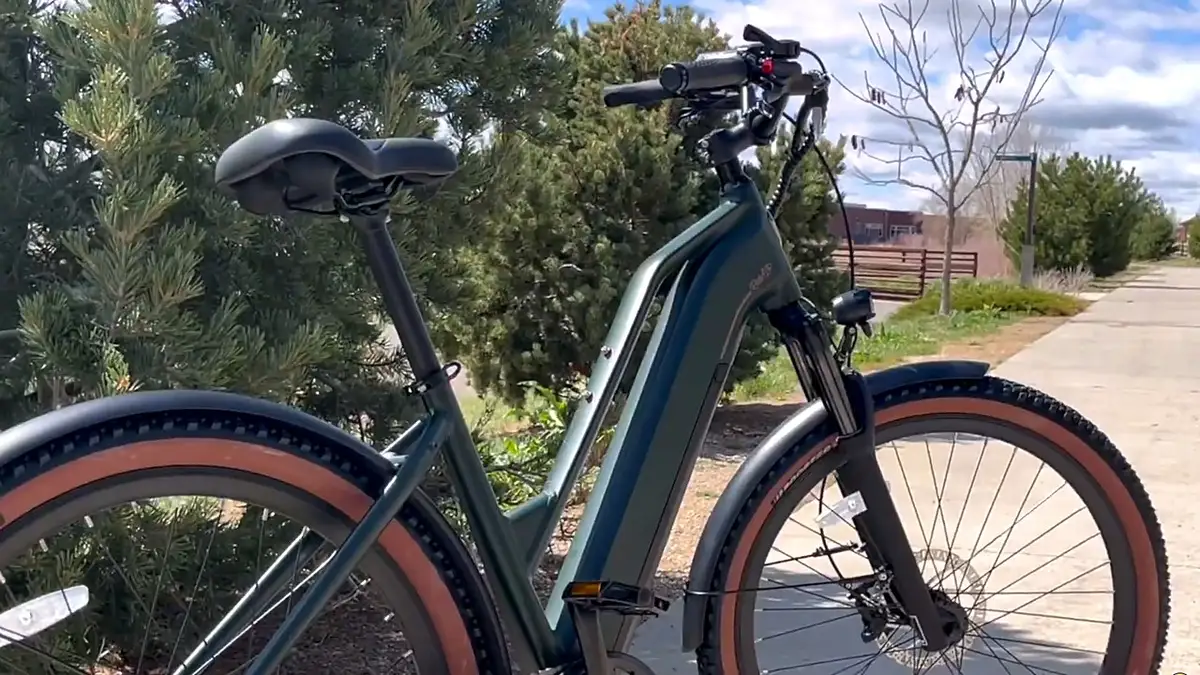
The deciding factor: comfort. The wide seat, 26 x 3 inch tires and upright cruiser position are what make this bike. At about 200 lbs and 6’1”, I found it really comfortable (5:02 to 5:07).
See the Cafe Cruiser at Ride1Up ($1,395 as of Oct 23, 2026; not an affiliate link)
Who it’s for
- Commuters who want comfort first. That’s what I’d use it for, and what I think most people will (5:29).
- Riders who like the beach cruiser look and feel (5:36).
- Anyone who wants to carry a passenger. Ride1Up sells a passenger kit with foot pegs (1:54).
- Apartment dwellers. The battery comes out with a key, so you can charge it upstairs (3:39).
- Riders who want a step-through frame. Ride1Up sells ST and XR frames.
Who should look elsewhere
- Riders who want a color display (0:38).
- Riders who need rear suspension (5:14).
- Anyone who wants a torque sensor. Ride1Up lists a current-based cadence system.
- Riders shorter than 5 feet. Ride1Up’s lowest listed rider height is 5’0” on the ST.
- Anyone who wants a lighter bike. Ride1Up lists 65 lbs.
Controls
On the left: grips that feel like leather, the hydraulic front brake, a thumb throttle that works from zero, and the display (0:20 to 0:35). There’s nothing in the center of the bar.
The display is a super simple black and white unit with five levels of pedal assist (0:41). This motor has a lot of power, and the throttle still works on level 0, so keep that in mind (0:45). It’s easy to bump the throttle while walking the bike. Ride1Up lists the display as a 2.2 inch two-tone LCD with adjustable speed settings.
Holding the plus button turns on the front headlight and the integrated rear tail light (1:33).
On the right: the same style of grip, a little wider so your palm rests comfortably, and the hydraulic rear brake (0:59). Then there’s the shifter, which I really like. You use your index finger and thumb to shift up and down (1:04). It feels super natural and makes shifting while riding really easy. Ride1Up lists it as a Shimano Acera 8-speed trigger shifter.
Tires, gears and motor
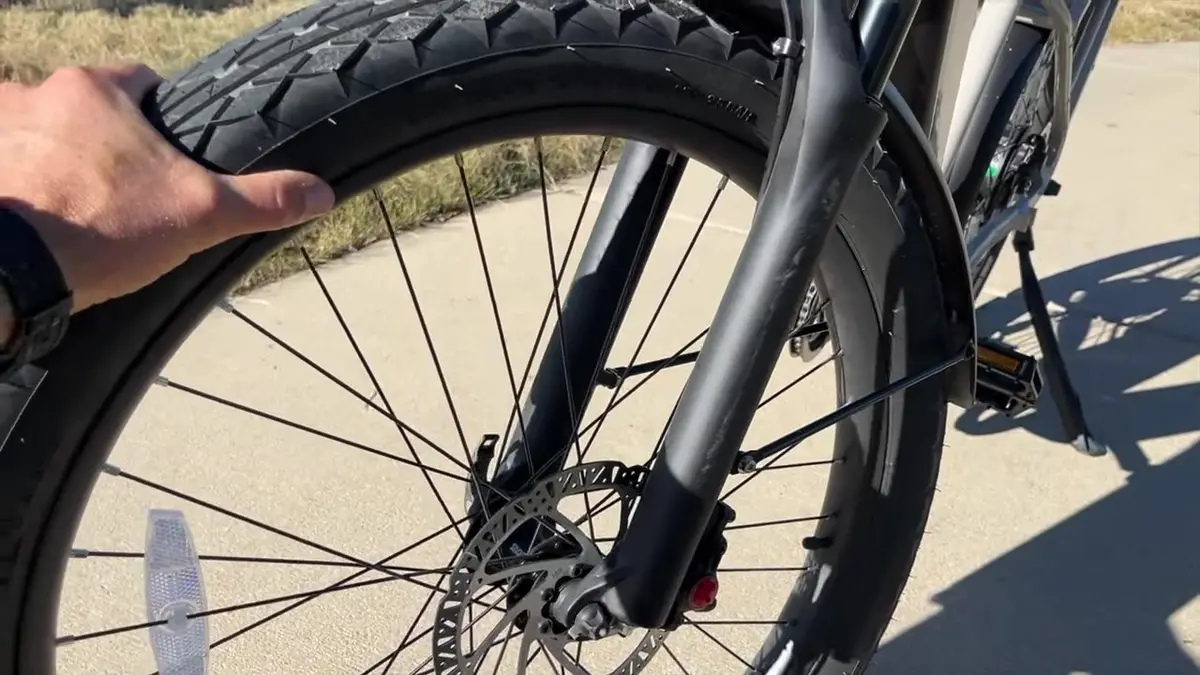
These are 26 inch tires, but they’re not traditional 4 inch fat tires (2:19). They’re 3 inches wide, a little narrower and sleeker (2:27). I really enjoy the look and the feel of this hybrid size (2:40).
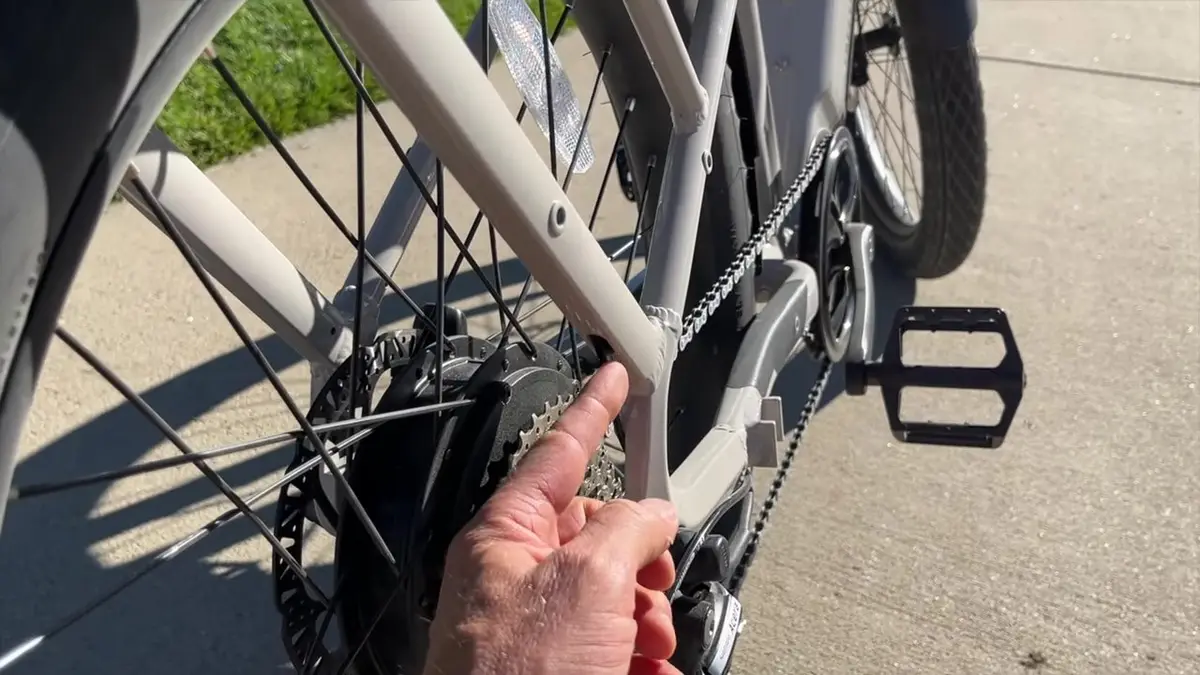
There’s a single chainring in front and eight gears in the rear (2:45), paired with a name-brand Bafang motor (2:53). The 750W Bafang rear hub has plenty of juice to get me up a hill at about 200 lbs (4:55 to 5:02).
Ride1Up lists 60 Nm of torque for that motor.
Battery and charging
To charge, you pull the rubber cap and plug in the provided charger (3:13). The battery is hidden in the frame, and it comes out. On the other side, you unlock it with the key, pull the lever, and the battery drops out (3:27). That’s really nice if you live in an apartment and can’t take the bike up with you (3:39).
What I measured on camera: about 20 to 30 miles on my test bike (video, 5:44).
Ride1Up lists a 48V 15Ah pack (720 Wh) with Samsung cells, rated for 30 to 50 miles. Its FAQ says 15Ah is the largest pack that fits this frame, so there’s no bigger battery upgrade. Ride1Up’s manual lists 3 to 6 hours for a full charge on the standard charger. It also recommends keeping the rubber cover on the charge port while riding, because moisture can ruin the battery. You can check today's price at Ride1Up.
Comfort and suspension
For what this bike is, the front fork gave me plenty of shock absorption (3:45). I mostly rode concrete trails, plus some gravel (3:52). Ride1Up lists a Mozo hydraulic fork with 80 mm of travel and a lockout.
There’s no rear suspension (5:14), so the 3 inch tires do a lot of the work in back, and they add real cushion (4:06).
The seat is very comfortable, with plenty of cushion (4:11). It’s rather wide, so it fits a lot of people. The rubber spacers underneath add some shock absorption in the seat itself (4:29). The seat post is a Zoom post (4:09).
At about 6’1”, I found the riding position really, really comfortable (5:07). Ride1Up’s geometry chart shows a cruiser handlebar with 50 mm of rise and 40 degrees of sweep. That’s what puts you upright.
Details
A lot of the wiring is routed inside the frame, including the wire for the tail light (3:01). It’s a nice design touch.
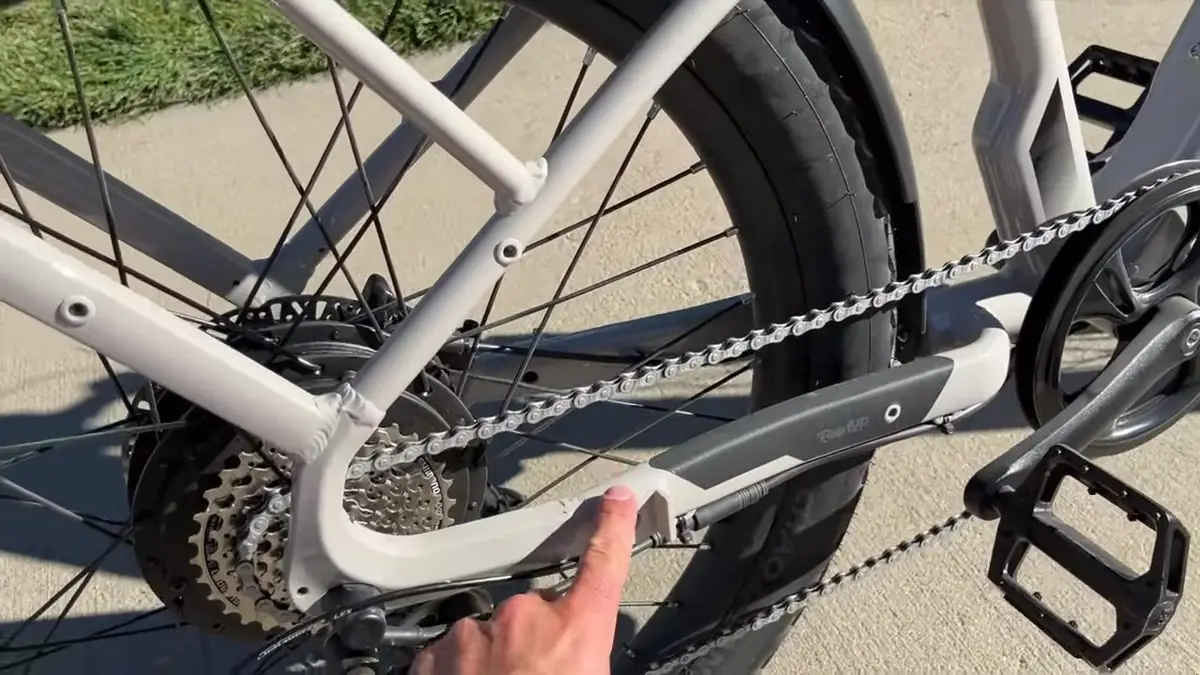
There’s also a chain slap guard to keep the chain from scratching the paint (4:36). I wish they’d integrated it. I’ve seen other companies use paint protection film there instead. Still, it’s doing its job protecting the frame.
Rack and passengers
The tail light sits right below the super-duty rear rack (1:54). Ride1Up sells a passenger kit for the back, and you can mount foot pegs too.
Ride1Up’s support site rates the Cafe Cruiser’s welded rack at 150 lbs and the whole bike at 350 lbs. Add up rider, passenger and cargo before you load it. Two adults can go over 350 lbs fast.
A long-term owner review
My testing was 20 to 30 miles (5:46). In the video I shared a customer review from Ride1Up’s website (5:52 to 6:42). The owner said he’d had two of these bikes for over two years. One had over 2,500 miles and the other over 1,000. All he’d needed was brake pads and replacement tubes. He rides a 50 mile round trip between Fort Lauderdale and Miami.
That’s his experience, not mine, but it’s a useful data point next to my shorter test.
What the specs mean on the road
750W Bafang geared hub, 60 Nm. Enough to get me up hills at about 200 lbs (4:55).
Class 3, 28 mph assist, 20 mph throttle. Fast enough for real commuting. Check your local rules on where Class 3 bikes can ride; my Class 2 vs Class 3 guide covers it.
26 x 3 in tires. A middle ground between commuter tires and fat tires. You get more cushion than a commuter tire and less weight and drag than a 4 inch fat tire.
Front fork only, 80 mm. Handles gravel and light dirt. The tires and seat take care of the rear.
Hydraulic disc brakes, 180 mm rotors. Light lever feel and consistent stopping, which matters with a passenger on the back.
65 lbs, 350 lb capacity. Not light, but it’s built to carry.
How it compares
| Ride1Up Cafe Cruiser | Ride1Up 700 Series | Aventon Pace 500.3 Step-Through | |
|---|---|---|---|
| Motor, sustained (W) | 750 | 750 | 500 (864 peak) |
| Battery (Wh) | 720 | 720 | 614 |
| Rated range (mi) | 30-50 | 30-50 | 60 |
| Tires (in) | 26 x 3 | 27.5 x 2.4 | 27.5 x 2.1 |
| Rear gears | 8 | 8 | 8 |
| Rack rating (lbs) | 150 | 50 | not listed |
| Weight (lbs) | 65 | 62 | 54 |
| Weight capacity (lbs) | 350 | 300 | 300 |
| Price | $1,395 (Oct 23, 2026) | $1,595 (Oct 23, 2026) | CA$1,999 (Oct 22, 2026) |
Sources: Ride1Up product pages and support article (Oct 23, 2026); my Ride1Up 700 Series and Aventon Pace 500.3 pages. “Not listed” means that page doesn’t give the number.
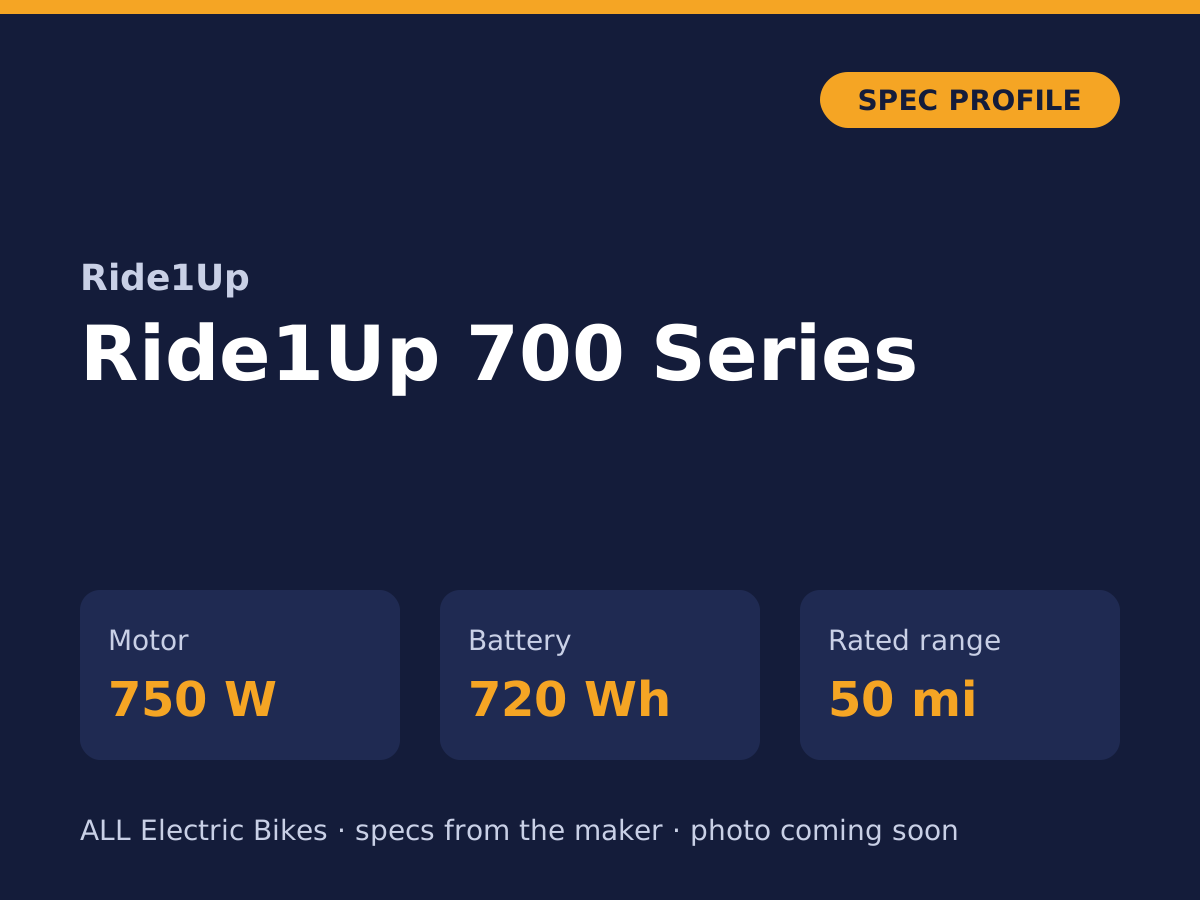
The 700 Series is the sportier Ride1Up commuter. It has the same motor and battery, narrower tires and more fork travel, and its rack is rated for 50 lbs instead of 150. The Pace 500.3 is lighter and has a torque sensor, but less motor and no rack listed in its spec. If you want to carry a passenger or a big load, the Cafe Cruiser is the one built for it.
Pros and cons
Pros
- Strong 750W Bafang motor that got me up hills at about 200 lbs (4:55)
- Comfortable at my height, with a real beach cruiser feel (5:07)
- Wide, cushioned seat with rubber spacers (4:29)
- 26 x 3 tires add comfort and look sleek (2:40)
- Index finger and thumb shifter that’s easy to use (1:04)
- Hydraulic disc brakes (0:21)
- Integrated headlight and tail light, wiring routed inside the frame (1:33, 3:01)
- Welded rear rack with a passenger kit available (1:54)
- Removable battery for apartment charging (3:39)
- Front and rear fenders included (8:28)
Cons
- Basic black and white display (0:38)
- Throttle still works in PAS 0 (0:45)
- No rear suspension (5:14)
- Add-on chain slap guard instead of something integrated (4:36)
- Cadence-based assist, no torque sensor
- 65 lbs
- Price is up from when I reviewed it
FAQ
How much does the Ride1Up Cafe Cruiser cost?
It was $1,195 when I reviewed it, down from almost $1,600 (8:13). As of Oct 23, 2026, Ride1Up lists it at $1,395.
Can the Cafe Cruiser carry a passenger?
Yes, with Ride1Up’s passenger kit and foot pegs (1:54). Ride1Up rates the rack at 150 lbs and the bike at 350 lbs total.
Does the throttle work from a stop?
Yes, it works from zero, and it still works in pedal assist level 0 (0:30, 0:45).
Is the battery removable?
Yes. Unlock it with the key, pull the lever, and it drops out (3:27).
How fast does it go?
Ride1Up lists it as Class 3: 28 mph on pedal assist and 20 mph on the throttle.
Is there a step-through version?
Yes. Ride1Up sells ST (step-through) and XR (step-over) frames.
Price
When I reviewed it, the Cafe Cruiser was $1,195 on Ride1Up’s website, down from almost $1,600 (8:13). As of Oct 23, 2026, Ride1Up lists it at $1,395. You still get the integrated headlight and tail light, front and rear fenders, the oversized 3 inch tires and the welded rack (8:20 to 8:28).
Check the Cafe Cruiser at Ride1Up
Related reviews and guides
“He makes me lie down in green pastures. He leads me beside still waters.” Psalm 23:2 (ESV)