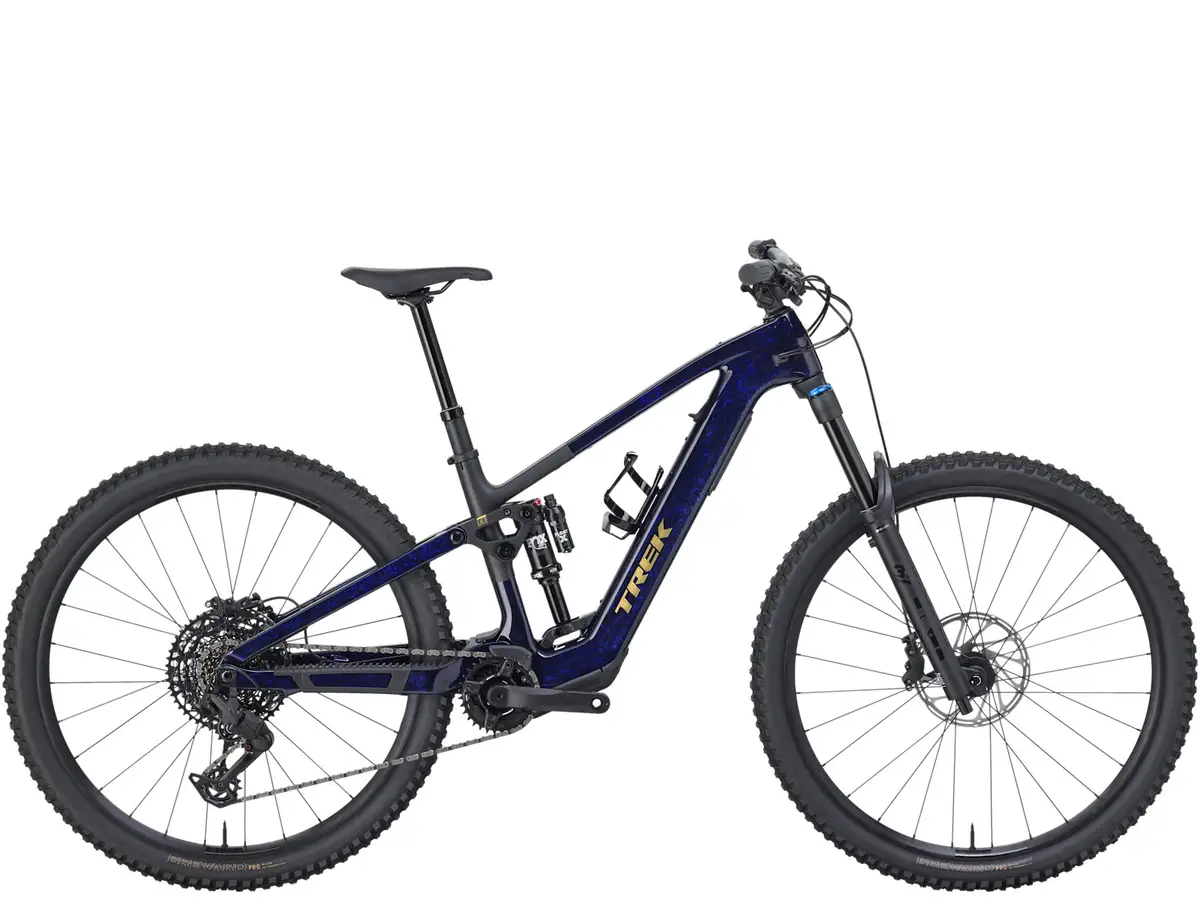
Most electric mountain bikes pick a lane. Trek’s Fuel+ Gen 2 frame is built to switch lanes, and the Trek Fuel+ EX 9.7 Gen 2 is the trail version of it: 145mm of rear travel, a 150mm fork, a quiet TQ motor and a carbon frame at 45.6 lb. I haven’t ridden it. This page covers the three EX builds Trek has published full specs for (9.7, 9.8 XT Di2 and 9.9 X0 AXS), and I’ll compare them with the Slash+, the Rail+ and the Aventon Ramblas I filmed. Everything here comes from Trek’s product pages, checked on Oct 28, 2026 and linked at the bottom.
One frame, three personalities
Trek sells the Fuel+ Gen 2 in three setups. Trek calls EX the do-it-all version, MX the “pop-happy” one with a smaller rear wheel, and LX the one built to “charge through it all” with more travel. They share one OCLV Mountain Carbon frame, and Trek’s parts list describes it as having adaptable travel from 145 to 160mm.
That adaptability comes from parts you can swap: an interchangeable alloy rocker link, an interchangeable lower shock mount and a flip chip that makes the leverage rate more progressive. The headset is a zero stack (ZS) standard, so angle-adjust headsets fit if you want to change the geometry later. If you buy an EX and want more travel down the road, the frame is designed for it, though Trek doesn’t list which parts you’d need.
The EX is the middle of the three: 145mm rear, 150mm front, and 29 in wheels on both ends in sizes M and up. The size S runs a 27.5 in rear wheel.
The motor is the quiet kind
Every Fuel+ uses TQ’s HPR60, rated at 60 Nm with 250W continuous and 350W peak. That’s a light-assist motor. Bosch’s CX on the Rail+ starts at 85 Nm. Trek says the HPR60 delivers more power and torque than the previous Fuel+ motor and kicks in at a lower cadence, so the help arrives earlier in the pedal stroke.
It’s a Class 1 bike, so assist stops at 20 mph and there’s no throttle. The TQ display sits on the handlebar and connects over Bluetooth and ANT+. Trek tests the system to UL 2849.
Battery
The battery is TQ’s 580Wh, and it’s removable. Trek doesn’t give a range in miles. It does say the new frame leaves room for a range extender, along with longer dropper posts, bigger shocks and frame bags. A 4A TQ charger comes with the bike.
Three builds, three price points
EX 9.7, $5,999.99. Fox Rhythm 36 fork and Fox Float X shock, SRAM Eagle 70 T-Type 12 speed (10 to 52 cassette, 32T ring), SRAM DB 8 4-piston brakes on 200mm rotors, Bontrager Line Comp 30 alloy wheels and Bontrager Brevard Pro XR 2.5 in tires. The bar is an 800mm Race Face Aeffect, the dropper is a Bontrager Line Dropper (150mm in S, 170mm in M, 200mm in L and XL) and the display is TQ’s LED unit. Trek lists 45.6 lb in size M, with sealant and no tubes. It comes in S to XL, and every size and color was in stock on Oct 28, 2026.
EX 9.8 XT Di2, $8,499.99. The step up brings Fox Factory suspension (a 36 GRIP X2 fork and a Float X shock), Shimano’s wireless XT Di2 12 speed with a 10 to 51 cassette, Shimano XT 4-piston brakes on 200mm rotors, Maxxis Minion DHF and DHR II tires, a 780mm Race Face Turbine bar and TQ’s color display. Trek doesn’t list a weight. Sizes run S to XXL, and it was build to order.
EX 9.9 X0 AXS, $9,999.99. The top build switches to RockShox, with a Lyrik Ultimate fork and a Deluxe Ultimate shock. It gets SRAM’s wireless X0 Eagle AXS T-Type with an AXS pod, SRAM Maven Silver brakes, Bontrager Line Pro 30 carbon wheels, a carbon Race Face ERA bar (800mm), a wireless RockShox Reverb AXS dropper and the color display. Trek doesn’t list a weight here either. It’s S to XXL and was build to order, with the GN color out of stock.
Trek also lists an EX 9.8 Eagle 90 ($8,199.99) and an EX 9.8 XT ($7,999.99), but it hadn’t published full specs for those listings on Oct 28, 2026, so I’ve left them out.
Frame details that matter
The frame has a downtube guard and a shuttle guard, internal routing, a UDH derailleur hanger standard and Trek’s Active Braking Pivot, which Trek says keeps the suspension working under braking. SRAM’s T-Type derailleurs bolt straight to the frame without a hanger. Max fork travel is 170mm, max rotor size is 203mm and max tire size is 29 x 2.50 in. The total weight limit is 300 lb, including the bike. Pedals aren’t listed in the parts.
How it compares
Against the Trek Slash+, which I haven’t ridden either: same HPR60 motor and 580Wh battery, but 170mm of travel and mixed wheels for steeper terrain. The Slash+ 9.7 is $7,999.99 at 47.58 lb. For $2,000 less, the EX 9.7 is about 2 lb lighter with less travel.
Against the Trek Rail+ 8 Gen 5: the same $5,999.99 buys a Bosch CX motor (85 Nm), an 800Wh battery and 160mm of travel, at 54.42 lb. The Rail+ has much more power and battery; the EX 9.7 is about 9 lb lighter. That’s the core choice here. The Rail+ 5 Gen 5 brings the Bosch setup down to $4,999.99.
Against the Specialized Turbo Levo 4 Alloy: 105 Nm, 840Wh and 57.3 lb for $4,999.99 (as of Oct 26, 2026). It’s another full-power option for less money than the EX 9.7, but heavier.
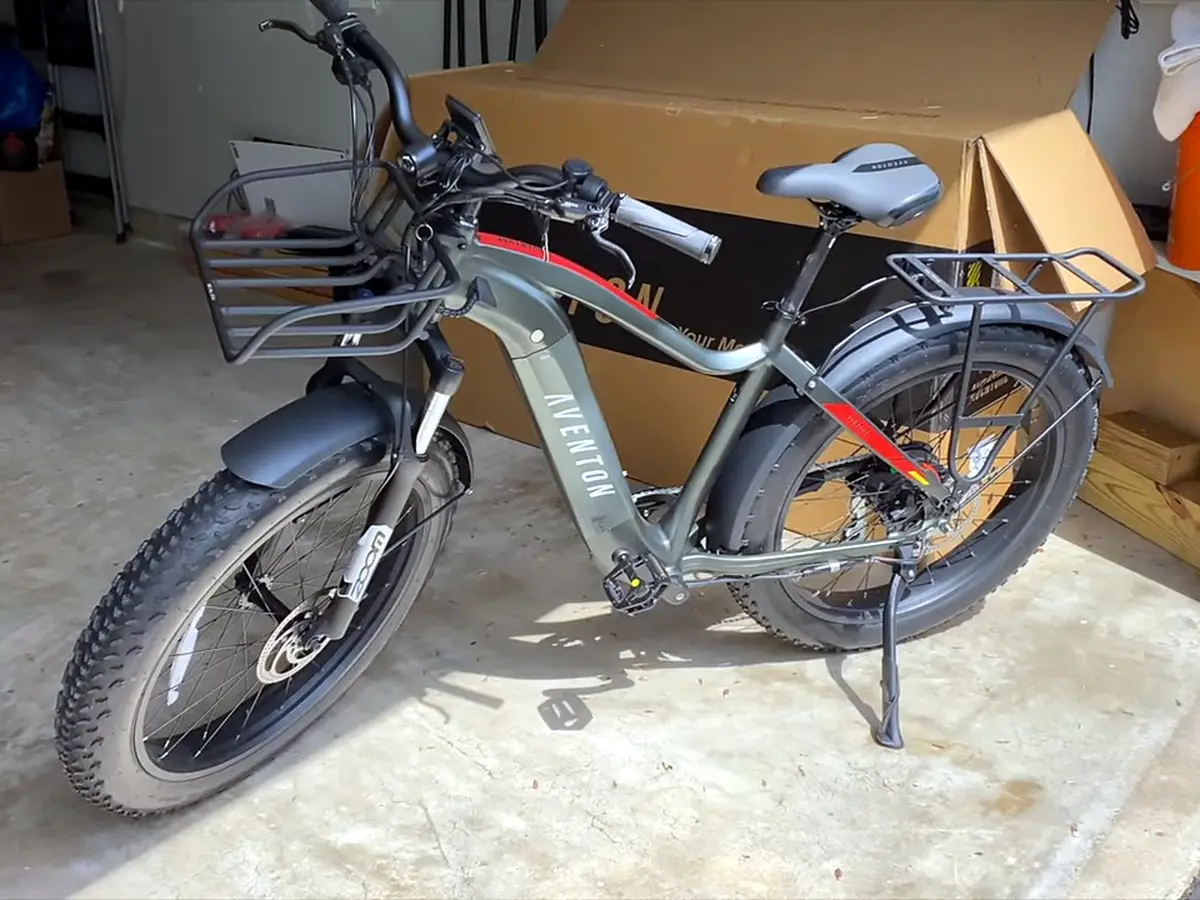
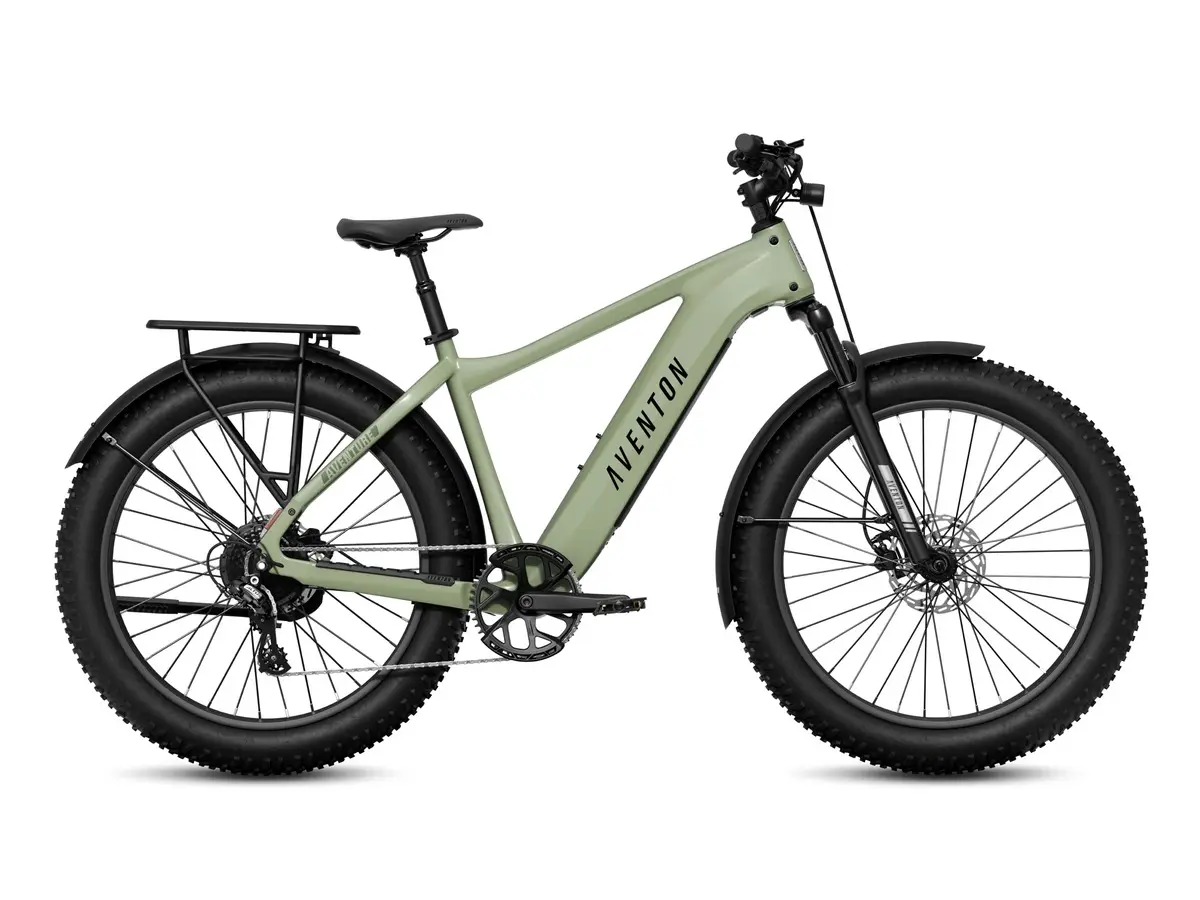
Against the Aventon Ramblas, which I filmed: a hardtail with a 100 Nm mid drive, 708Wh and about 54 lb in its current ADV version. It has a coil fork and no rear suspension. The Fuel+ EX is full suspension, carbon and lighter, with about 60% of the torque.
FAQ
Have I ridden the Fuel+ EX Gen 2?
No. This page is based on Trek’s product pages, checked Oct 28, 2026.
Is 60 Nm enough for an e-MTB?
I can’t answer that without riding it. On paper it’s a lighter assist than full-power motors like the Bosch CX (85 Nm on the Rail+), and Trek pairs it with a lighter bike. Riders who want the bike to do most of the climbing should look at full-power options.
What’s the difference between EX, LX and MX?
Travel and wheels. EX is 145mm rear and 150mm front on 29 in wheels. LX is 160mm rear and 170mm front with a coil shock on some builds. MX is 150mm rear and 160mm front with a 27.5 in rear wheel. All three share the frame and motor.
How far does it go?
Trek doesn’t give a range figure. The battery is 580Wh, and the frame has room for a range extender.
Which build is in stock?
On Nov 3, 2026, the EX 9.7 was in stock online in 7 of its 8 size and color options. The 9.8 XT Di2 and 9.9 X0 AXS were build to order.
Pros and cons (from the specs and sources)
Pros: 45.6 lb for the 9.7 is light for a full-suspension e-MTB; one frame that can change travel with swappable parts; quiet TQ motor; removable 580Wh battery with room for a range extender; 4-piston brakes and 200mm rotors on every build; 9.7 in stock online in most sizes.
Cons: 60 Nm is a light assist next to full-power motors at the same price; no range figure; no weight listed for the 9.8 and 9.9; Class 1 only; the 9.8 and 9.9 cost $2,500 to $4,000 more than the 9.7.
Who it’s for
On paper, the Fuel+ EX fits trail riders who want an e-MTB that weighs and handles closer to a regular trail bike, and who are happy to share the climbing work with a quieter, lighter motor. The 9.7 is the build most riders will compare, since it’s in stock and has a published weight. Riders who want maximum assist or range per dollar should look at the Rail+ or the Levo 4 Alloy.
Price
As of Oct 28, 2026 on trekbikes.com: the Fuel+ EX 9.7 Gen 2 was $5,999.99, the Fuel+ EX 9.8 XT Di2 Gen 2 $8,499.99 and the Fuel+ EX 9.9 X0 AXS Gen 2 $9,999.99. None was on sale.
“who has kept our soul among the living and has not let our feet slip.” Psalm 66:9 (ESV)