Plenty of fat tire e-bikes look like they belong on a trail. Far fewer have been tested to prove it. The Lectric XPeak2 is one of the few at this price that Lectric says passed the off-road e-bike safety standard, ISO 4210-10, at a US lab. I haven’t ridden it. Everything here comes from Lectric’s official product page and policies, rechecked on Oct 27, 2026, and from the fat tire and trail bikes I have tested. Where a number is my own math, I say so.
Should you buy one?
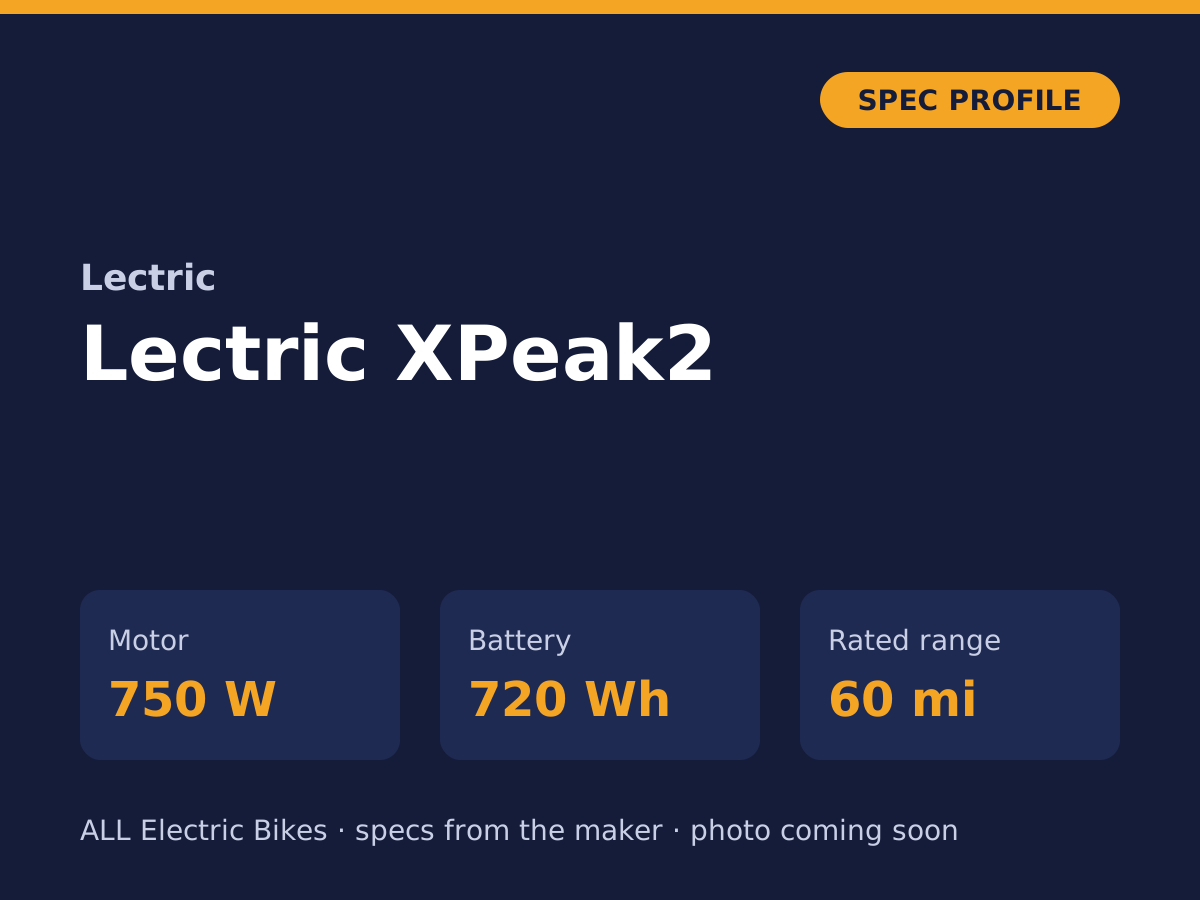
The XPeak2 costs $1,499 (as of Oct 27, 2026) in either the high-step or step-thru frame, with a 720 Wh battery. A long-range version with a 960 Wh battery is $1,699. For that, Lectric lists a 750W rear hub motor with 1310W peak and 85 Nm, a torque sensor, an 80mm RST Renegade fork, hydraulic brakes with a 203mm front rotor, 26 x 4 in knobby tires and an 8 speed Shimano Altus drivetrain. It can ride as a Class 1, 2 or 3 bike where your state allows, up to 28 mph.
The big trade-off is weight. Lectric lists 64.5 lb without the battery and 10.5 lb for the battery, so about 75 lb ready to ride by my math. The payload is 330 lb, and the rear rack is rated for 60 lb. That’s fine for one rider and a day bag, not for heavy cargo.
Lectric also says Men’s Health named the XPeak 2.0 a “Best of Sweat” winner in its 2025 Tech Awards. That’s a magazine award, not a test result, so I give it less weight than the ISO rating.
The torque sensor changes the feel
The headline upgrade over the first XPeak is a torque sensor. Lectric pairs it with what it calls PWR+ programming, which manages the motor’s output based on how hard you pedal. A torque sensor reads the force on the pedals, so a harder push gets more help and a light spin gets less. On loose dirt that matters: a cadence sensor that kicks in at a fixed level can spin a rear tire on a climb, while a torque sensor lets you meter it with your legs.
The Aventon Aventure 3 I filmed also has a torque sensor on a 26 x 4 in fat tire bike, rated at 80 Nm. At 6’1” and about 200 lb, I had plenty of power for every incline I rode on it. The XPeak2 lists slightly more torque at 85 Nm, but I haven’t ridden it, so I can’t tell you how its sensor tuning compares. There’s also a thumb throttle under the left grip for starts and short bursts.
Trail parts, and what they mean
The fork is an adjustable RST Renegade with up to 80mm of travel, and Lectric calls it the first and only one in its class. Eighty millimeters is enough to take the sting out of roots, ruts and washboard gravel, though it’s short next to a real mountain bike. There’s no rear suspension, so the 4 in tires and the saddle handle the back end.
The brakes are hydraulic mineral oil units with a 203mm front rotor and a 180mm rear rotor, both 1.8mm thick. Most of your stopping comes from the front wheel, and a larger rotor gives more leverage and sheds heat better on a long descent with a 75 lb bike.
The tires are 26 x 4 in, puncture resistant and knobby, with Slime installed. The front wheel uses a thru axle, which keeps the wheel straight and the rotor aligned, and comes off in minutes. Lectric says the bike weighs 57.2 lb with the front wheel removed and measures 60 x 10 x 32 in that way, which helps if you’re loading it into an SUV.
The frame is hydroformed 6000 series aluminum with the main cables routed inside the down tube. The ISO 4210-10 rating covers the frame, fork, stem and handlebars, which is what you want tested on a bike that’s going to see drops and impacts.
Gearing and speed
The drivetrain is an 8 speed Shimano Altus with an 11 to 32T freewheel and a 46T chainring, shifted with a thumb trigger. That’s a sensible spread for a bike that can go 28 mph: the 11T cog lets you keep pedaling at Class 3 speed, and the 32T helps on a climb if you’re conserving battery.
If you plan to ride at 28 mph, check where that’s legal. Class 3 bikes are often barred from multi use paths and trails, and many off-road trails don’t allow e-bikes with throttles at all. Our e-bike laws hub covers the rules by state.
Range and charging
Lectric rates the 720 Wh battery for up to 60 miles and the 960 Wh long-range battery for up to 80 miles. The battery is 48V and certified to UL 2271, and the bike is certified to UL 2849. Those range figures are best cases. A heavy bike on 4 in knobby tires, ridden on dirt with high assist, will land well below them. For context, on the Aventure 3 I rode mostly gravel and often above Eco, and I said I wouldn’t expect its 65 mile rating from that kind of riding. I’d plan the same way here.
Charging comes from a standard 2A charger that Lectric says takes 6 to 8 hours, with an optional 5A fast charger sold separately. There’s an auxiliary charging port near the bottom bracket, so you can charge on the bike, and the battery comes out for charging indoors.
Fit
Lectric lists riders from 5’4” to 6’5” for the high-step, with a 29 in standover, a seat height from 34 to 46 in, a 42 in handlebar height and a 23.6 in wide bar. The step-thru version costs the same and is easier to mount, which matters on a 75 lb bike when you’re stopping on a slope. Assembly takes under five minutes, Lectric says: pedals, front wheel and four handlebar bolts.
Lights, display and details
There’s an integrated headlight and taillight powered by the battery, a color LCD with a USB-C port and IP65 rated electronics, lock-on grips, quick release pedals, a side kickstand and accessory mounts on the frame. Lectric doesn’t list turn signals or fenders as standard on this page.
How it compares
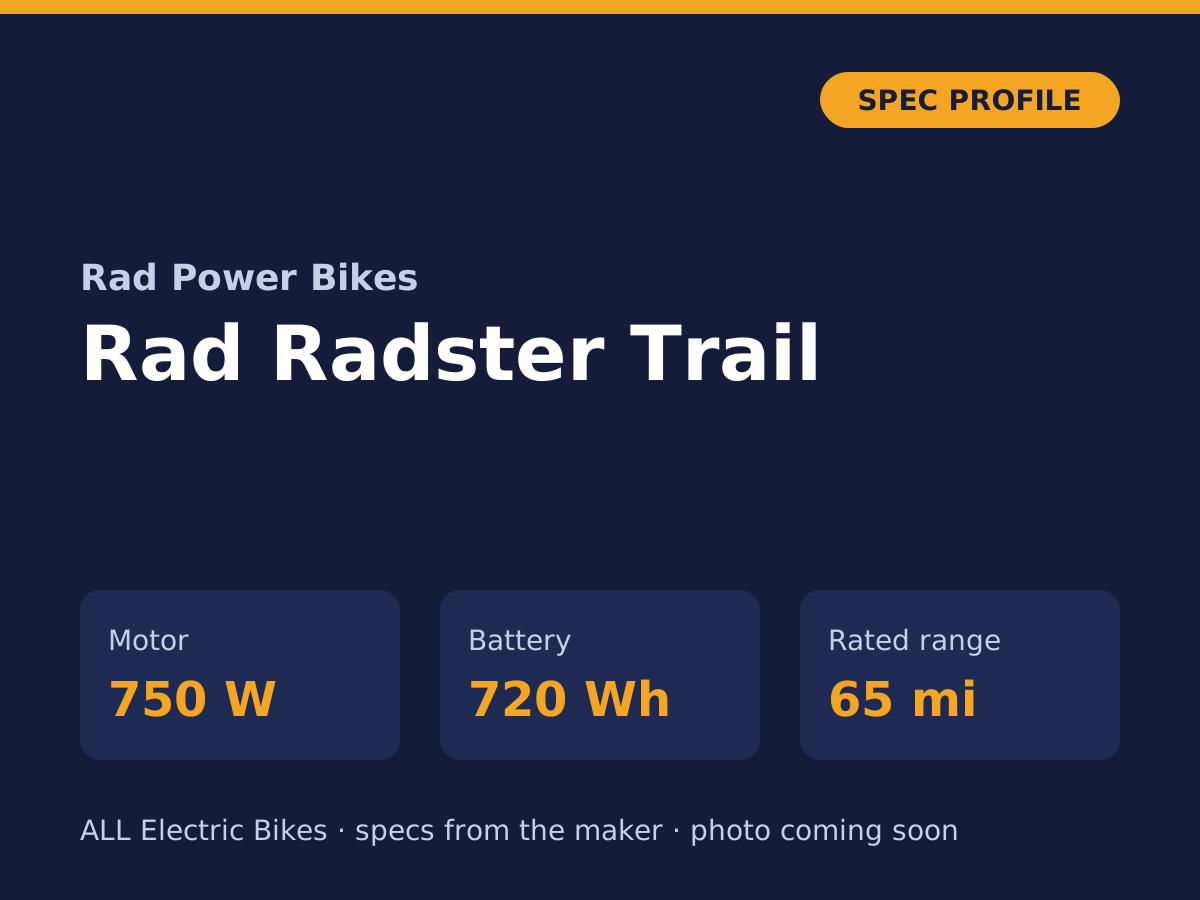
Against the Aventure 3, the XPeak2 costs $500 less at $1,499 versus $1,999 for the Aventure 3 (as of Oct 24, 2026, from my review), carries a smaller standard battery (720 Wh versus 733 Wh) and lists a lower payload (330 lb versus Aventon’s 400 lb). It adds the ISO eMTB rating and the 203mm front rotor. The two weigh about the same: Aventon lists the Aventure 3 at 76 lb.
If you want an actual mountain bike rather than an all-terrain fat tire bike, the Aventon Ramblas I tested is a different tool: a mid-drive on 29 x 2.4 in tires at 56 lb. A mid-drive uses the bike’s gears and suits steep technical climbs better than a hub motor.
Warranty and returns
Lectric includes a one year warranty, with extended coverage sold separately. Its refund policy, last revised June 4, 2026, says all sales are final once the order ships. Approved returns must be unused, in the original packaging and for a reason Lectric accepts; you pay shipping, and Lectric may charge a restocking fee of up to $300. You can cancel for a full refund until the shipping confirmation arrives. Lectric’s retail store offers test rides if you can get to one.
FAQ
Have I ridden the XPeak2?
No. This page is built from Lectric’s official product page and refund policy, and from bikes I have tested.
How fast does it go?
Up to 28 mph as a Class 3 bike, where permitted. It can also be set to Class 1 or Class 2.
How far does it go?
Lectric rates the 720 Wh battery for up to 60 miles and the 960 Wh battery for up to 80 miles.
How much does it weigh?
64.5 lb without the battery. With the 10.5 lb battery, about 75 lb by my math.
Pros and cons (from the specs)
Pros: torque sensor with 85 Nm; ISO 4210-10 eMTB rating; 80mm RST fork; 203mm front rotor; 8 speed gearing; high-step and step-thru at the same price; optional 960 Wh battery.
Cons: about 75 lb with the battery; 330 lb payload and a 60 lb rack; no rear suspension; one year warranty; strict return policy.
Who it’s for
The XPeak2 makes sense for riders who want a fat tire bike for gravel, dirt roads and easy trails, who value a torque sensor and want proof the frame was tested for off-road use. Look elsewhere if you need to carry it up stairs, haul more than a day bag, or ride technical singletrack, where a mid-drive mountain bike is the better fit.
Price
$1,499 for the XPeak2 high-step or step-thru, and $1,699 for the long-range high-step, on Lectric’s site as of Oct 27, 2026.
“How beautiful upon the mountains are the feet of him who brings good news, who publishes peace, who brings good news of happiness, who publishes salvation, who says to Zion, “Your God reigns.”” Isaiah 52:7 (ESV)