There’s a gap in the e-bike market between commuters that panic on gravel and full mountain bikes that feel like overkill on the way to the coffee shop. The Velotric Summit 1 is built for that gap: a hub motor hardtail with a 120mm fork, 27.5 x 2.6 in tires and a motor Velotric rates at 90 Nm. I haven’t ridden it. Everything here comes from Velotric’s official product page and policies, rechecked on Oct 27, 2026, and from the bikes I have tested. I mark my own math as mine.
Should you buy one?
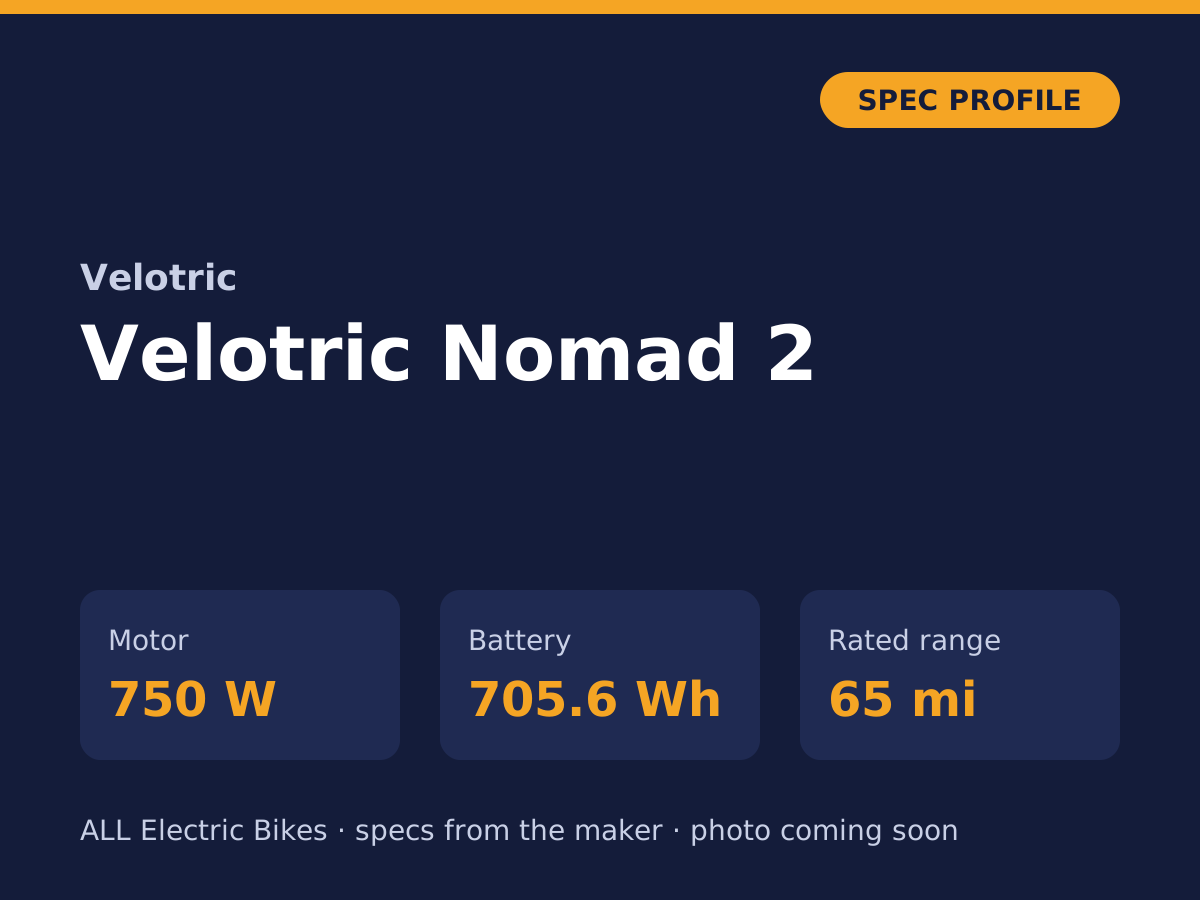
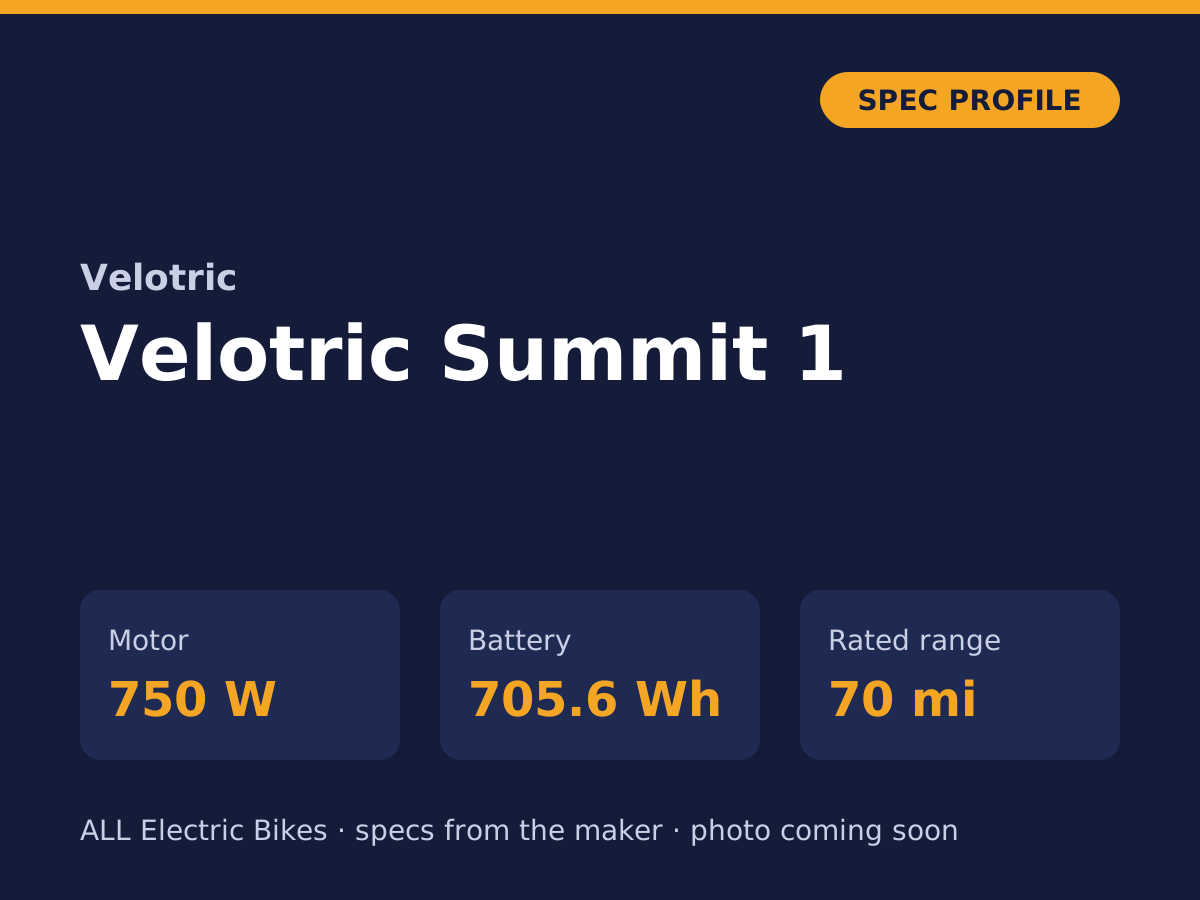
The Summit 1 costs $1,699 (as of Oct 27, 2026), against a compare-at price of $1,999 on Velotric’s page. For that, Velotric lists a 750W rear hub with 1300W peak and 90 Nm, a 705.6 Wh battery, a hydraulic fork with 120mm of travel and lockout, Shimano hydraulic disc brakes, a Shimano 8 speed with an 11 to 40T freewheel, a 2.8 in color display with Bluetooth, Apple Find My, and a sensor you can switch between torque and cadence. It comes in two frame sizes and is rated for 440 lb total.
The trade-offs: it weighs 62 lb, fenders and a rear rack are optional extras, and it’s a hub motor bike styled like a trail bike, which isn’t the same as a mid-drive mountain bike. Velotric’s stock showed some size and color combinations sold out on Oct 27, 2026, including the Large in Sunrise Orange and the Regular in Space Black.
Velotric also now sells the Summit 2 at $2,099 (as of Oct 27, 2026). From its listing, it moves to an 801.6 Wh battery, a 120mm air fork and a 95 mile rating, at the same 440 lb load. So the Summit 1 is now the value pick in its line, $400 cheaper, and I’d decide between the two before deciding on anything else.
SensorSwap, and why it’s unusual
Most e-bikes give you one kind of pedal sensor. Velotric’s SensorSwap lets you choose. In torque mode, the motor reads how hard you push, so the help builds with your effort, which feels natural and gives you control on loose climbs. In cadence mode, the motor gives a set level of help as soon as the cranks turn, which is easier for relaxed cruising when you just want to spin. Velotric pairs that with three riding modes and five assist levels, plus a removable trigger throttle.
The only other bike I’ve filmed with this choice is the Aventon Aventure 3, which has a torque sensor you can switch to cadence. That bike lists 80 Nm on a fat tire frame. The Summit 1 lists more torque on narrower, faster rolling tires.
Power and speed
Ninety Nm is strong for a hub motor. It should help on steep dirt roads, loaded climbs and starting from a stop on a hill. The Summit 1 ships with a 20 mph top speed, and Velotric lets you set it anywhere from 12 to 28 mph, so it can be Class 1, 2 or 3. Many trails don’t allow throttles or Class 3 bikes at all, so check before you ride off road. Our e-bike laws hub covers the rules by state.
The trail parts
The fork is a hydraulic suspension unit with 120mm of travel, lockout and a 15 x 110mm thru axle on a Novatec hub. That’s real travel for gravel, fire roads and rooty trails, and the thru axle keeps the front wheel stiff under braking. Lock it out on pavement so you don’t waste energy bobbing.
The tires are Kenda 27.5 x 2.6 in, puncture resistant MTB tires. That width sits between a commuter tire and a fat tire: enough grip and cushion for mixed surfaces without the drag of 4 in rubber. The brakes are Shimano hydraulic discs with 180mm rotors front and rear and motor cutoff levers. The frame is triple butted aluminum, and the handlebar is wide for control: 760mm on the Regular, 780mm on the Large.
An 11 to 40T freewheel with a 44T narrow wide chainring gives a low climbing gear for steep pitches or a dead battery, and a high enough top gear to pedal at speed.
Range and charging
Velotric rates the 48V, 705.6 Wh battery for up to 70 miles on pedal assist and 60 miles on throttle. Its own footnote says that’s for a 187 lb rider in PAS 1 Eco on flat roads, which is the easiest case. Dirt, hills and higher assist will cut that sharply. The pack uses Samsung or LG 21700 cells certified to UL 2580, the battery is IPX7 and UL 2271, and it charges with a 48V 3A fast charger. Velotric doesn’t list a charge time on this page.
Fit and sizes
There are two sizes: Regular for riders 5’1” to 5’10”, and Large for 5’8” to 6’6”. The overlap at 5’8” to 5’10” means riders in that range can choose. Velotric fits the Regular with a 35mm stem and the Large with a 50mm stem. Size matters more on a trail bike than a commuter, because you shift your weight around more.
Display, lights and tracking
The 2.8 in color display has Bluetooth and an adjustable angle, and there’s a USB-A port to charge a phone. The front light is a 130 lux light sensing LED, and the rear light works as a brake light, steady or flashing. The bike is rated IPX6 for water. Apple Find My support means you can track it from an iPhone if it’s stolen. In the box: the battery, charger, front light, display, reflectors, a bell, a kickstand and pedals.
How it compares
Against the Velotric Discover 1 I filmed, the Summit 1 is a different kind of Velotric. My Discover 1 had 65 Nm, a 692 Wh battery and weighed 63 lb, set up as a commuter. The Summit 1 gives up commuter extras like fenders and a rack for a long travel fork, knobby tires and more torque, at about the same weight.
If you want true trail performance, the Aventon Ramblas I tested is a mid-drive mountain bike at 56 lb with 100 Nm. A mid-drive drives the cranks and uses the gears, which suits steep technical climbs better than any hub motor. The Summit 1 is the better fit for mixed riding where pavement, gravel and easy trails share the same ride.
Warranty and returns
Velotric gives a two year warranty. Returns are more limited: you have 14 days from delivery, the bike must be unused and in its original packaging with every accessory, and Velotric deducts a $200 restocking fee per bike. Orders can only be cancelled before they ship. Velotric also lists a $60 discount for military, medical providers, first responders, students and teachers after verification.
FAQ
Have I ridden the Summit 1?
No. This page is built from Velotric’s official product pages and return policy, and from bikes I have tested.
Is it a real mountain bike?
It’s a hub motor hardtail with a 120mm fork. It should handle gravel and easier trails. For technical singletrack, a mid-drive mountain bike is the better tool.
How far does it go?
Velotric says up to 70 miles on pedal assist and 60 on throttle, for a 187 lb rider in the lowest Eco setting on flat roads.
Summit 1 or Summit 2?
The Summit 2 costs $400 more and lists a bigger 801.6 Wh battery and an air fork. The Summit 1 is the lower price way into the same idea.
Pros and cons (from the specs)
Pros: 90 Nm; switch between torque and cadence sensing; 120mm fork with lockout and thru axle; 11 to 40T gearing; two frame sizes up to 6’6”; Apple Find My; two year warranty.
Cons: 62 lb; fenders and rack cost extra; hub motor rather than a mid-drive; $200 restocking fee on returns; the Summit 2 now exists.
Who it’s for
The Summit 1 makes sense for riders who split time between pavement, gravel and easy trails, riders who want to choose how the assist feels, and tall riders up to 6’6”. Look elsewhere if you want fenders and a rack included, ride technical singletrack, or want the newest Summit with the bigger battery.
Price
$1,699 on Velotric’s site as of Oct 27, 2026. The page listed a compare-at price of $1,999.
“Have I not commanded you? Be strong and courageous. Do not be frightened, and do not be dismayed, for the LORD your God is with you wherever you go.” Joshua 1:9 (ESV)