
In the full review (15 sections)
- How I tested it
- Quick specs (sourced)
- Lighting it took no skill
- The ash falls out of the way
- Cut your logs short
- The outside wall gets hot
- Grass, mulch, and decks
- The morning after
- It fits in a Model 3 trunk
- How it compares
- Pros and cons
- Who should buy it, and who should skip it
- FAQ
- Why this review stops here
- Sources
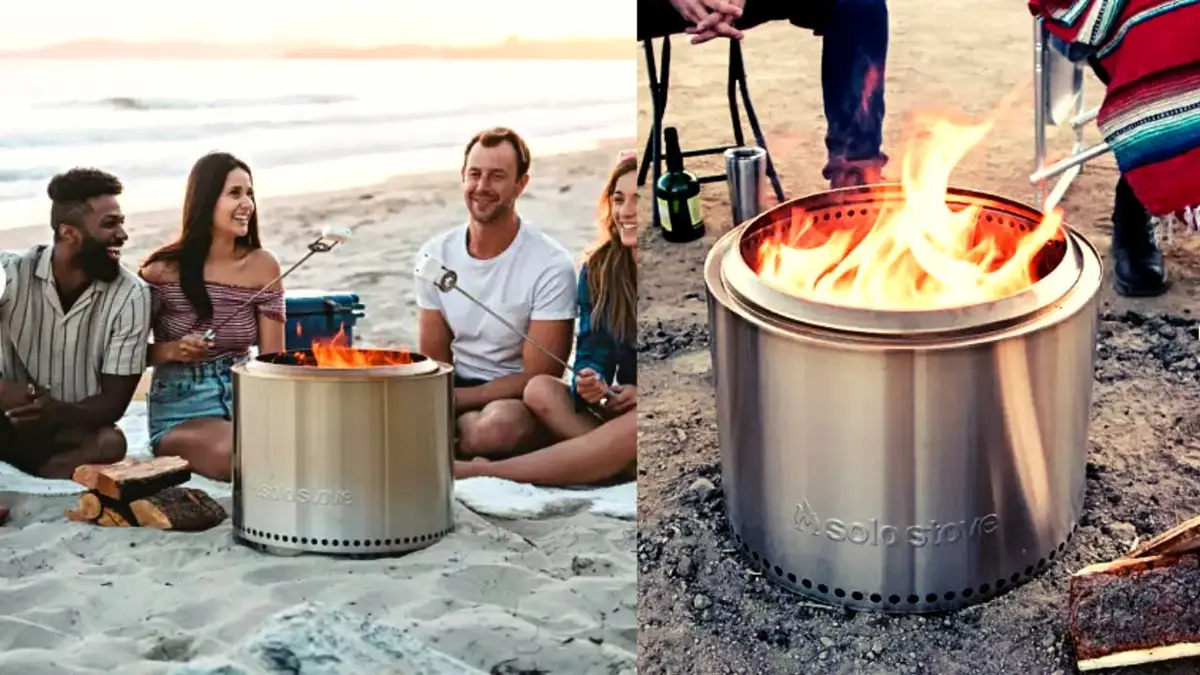
Short verdict: The Solo Stove Bonfire is the easiest wood fire I’ve ever started, and it really does burn hot and clean once you load it correctly. What sold me is that it moves. I burned it on mulch, burned it on grass, packed it in its bag the next morning and could have driven it anywhere. The trade-offs are real, though. It goes through wood fast, the outer wall gets hot enough to hurt a kid, and somebody has to deal with the coals and ash before it goes back in the bag. If you want one fire pit for the backyard, camping and a friend’s house, this is the one I’d point you to. As of October 26, 2026, Solo Stove sells the current Bonfire 19.5” Fire Pit + Stand Bundle for $314.99 on sale ($349.99 regular).
How I tested it
My video is from October 2020. The Bonfire was a gift from a family member, not from Solo Stove. The video isn’t sponsored, and Solo Stove didn’t send it to me. The description does use an affiliate link.
I burned it several times in my yard: once on mulch and once directly on grass. I lit it with newspaper and twigs, then fed it logs, including one log I deliberately left sticking out over the rim so you could see what that does to the smoke. The morning after one fire, I dumped the leftover coals into a bucket of water, moved the pit, and packed it back into its carry bag.
What I didn’t do: I didn’t use it on a deck, I didn’t use Solo Stove’s stand, and I didn’t measure temperature, burn time or how much wood a fire took. I also didn’t test it on a camping trip. Everything in the specs table comes from Solo Stove’s current product page, not from me.
One more thing to know. The Bonfire in my video is the 2020 version. Solo Stove now sells the Bonfire 2.0, which has a removable ash pan under the base plate. My unit didn’t have that, so my cleanup story below is about the older design.
Quick specs (sourced)
| Spec | Solo Stove Bonfire 2.0 (solostove.com, Oct 26, 2026) |
|---|---|
| Diameter | 19.5 in |
| Height (fire pit) | 14.3 in |
| Weight (fire pit) | 23.3 lb |
| Material | 304 stainless steel |
| Stand (in the bundle) | 2.8 in tall, 17 in diameter, 1.7 lb |
| Heat radius (Solo Stove) | 4 to 6 ft |
| Seats (Solo Stove) | 4 to 6 people |
| Ash handling | Removable base plate and ash pan |
| Warranty | Lifetime |
| Price as of Oct 26, 2026 | Fire Pit + Stand Bundle, $314.99 sale, $349.99 regular |
| CPSC recalls | None found for Solo Stove fire pits |
Lighting it took no skill
I scrunched up newspaper, put twigs on top, added a few logs and lit it. The newspaper caught and everything was going quickly. I didn’t need to blow on it, rearrange it or babysit it.
The reason is the airflow. The holes at the bottom pull air in, and that air travels up between the double walls and comes out through the vent holes near the top rim. In my footage you can see flames at those top vents. That’s the fresh air feeding the fire from above, which Solo Stove calls a secondary burn. I liked the engineering a lot. It’s a simple idea, a campfire in a can, done about as efficiently as you can do it.
That efficiency has a cost: it burns through wood. Because it burns so hot and so completely, a load of logs doesn’t last as long as it would in a lazy open fire. Have more wood stacked nearby than you think you need. Solo Stove’s own page says the same thing and recommends starting the Bonfire with 3 to 4 logs.
The ash falls out of the way
The feature I didn’t appreciate until I used it is what happens to the ash. The coals sit on a raised base plate, and the ash falls through to the bottom, below the fire. That keeps the fire from smothering itself in its own ash. It leaves room for fresh wood to sit right on the hot coals, so new logs catch faster and the fire keeps getting stronger.
That’s why I didn’t have to poke at it. With a normal fire you’re always rearranging logs and clearing space. With this, I mostly just added wood. I think it’s the most underrated part of the design.
Cut your logs short
This is my most useful tip. Keep your logs short enough to sit fully inside the pit, below the vent holes at the top. When I left a log sticking out over the rim, I got a lot more smoke around the fire. In the video I left one hanging out on purpose so you could see it.
So if you split your own wood, cut it shorter than you would for a regular fire ring. A log that fits inside lets the airflow do its job, and that’s where the low smoke comes from. A log that sticks out breaks that, and you’re back to dodging smoke.
The outside wall gets hot
The outer wall gets really hot. It won’t burn you the instant you touch it, but it’s hot enough that a kid who touches it is going to feel it and probably cry. If you have little ones running around, plan where everybody sits and keep them back.
Solo Stove’s page agrees. It warns that the exterior gets extremely hot during use and says to wait at least an hour after the flames die before touching it with bare hands. It sells a surround accessory if you want a physical barrier.
Grass, mulch, and decks
I burned it on mulch and then directly on grass. On grass, the patch under the pit was wilted the next morning. I moved the pit, and after about a day the grass came back. So in my yard, burning directly on grass didn’t kill it.
I never put it on a deck. I prefer it out in the middle of the yard, where I can move it around. Solo Stove sells a stand that lifts the pit off the surface. Its page says wooden decks are a no-go without the stand, and that with the stand you can burn on a deck. The current bundle includes the stand. I didn’t test the stand, so I can only tell you what Solo Stove says about it.
Common sense applies. You’re playing with fire. Don’t set it up near your house, and pick a safe spot away from anything that can catch.
The morning after
This is the part I liked least. Say it’s evening, you’re roasting marshmallows with the family, the fire is dying down, and it might rain overnight. You can’t just walk away from it the way you would from a stone fire ring that lives in one spot.
I came back several hours later and still had hot coals, and the whole thing was still warm. I dumped the coals into a bucket of water, then cleaned it up and put it in its bag. It’s not hard, but it’s an extra step, and you have to do it before it can go away.
The reason I wanted it put away was rust. In the video I said this steel will rust if it gets wet or sits out in the weather for days. Solo Stove’s current page says its pits are 304 stainless steel, call it corrosion-resistant, and say they can stay outside without rusting if you cover them with a Solo Stove lid or shelter. It also says the steel will develop a golden-blue patina over time, which is normal. I didn’t leave mine out to find out who’s right, so I’d keep it covered or bring it in.
The current Bonfire 2.0 should make cleanup easier than it was for me. Its base plate lifts out, and there’s an ash pan underneath, so you don’t have to tip the whole pit over to empty it. I haven’t used that version.
It fits in a Model 3 trunk
When I picked mine up, the box was huge. It slid into my Model 3 trunk with maybe a quarter inch to spare. Out of the box, in its carry bag, it’s much easier to move.
That portability is the number one reason I’d buy it. If you camp, have an RV, or want the same fire at home and at a friend’s place, you dump the coals, dump the ash, bag it and go. Solo Stove includes a carry bag with every pit. A fixed fire pit can’t do that. And if you know anything about starting a fire, you can start this one at a campsite in minutes.
How it compares
Prices are Solo Stove’s live sale prices, as of October 26, 2026. I’ve only used the Bonfire and, in a separate video, the Yukon.
| Solo Stove Ranger | Solo Stove Bonfire 2.0 | Solo Stove Yukon 2.0 | |
|---|---|---|---|
| Diameter | 15 in | 19.5 in | 27 in |
| Weight with stand (Solo Stove comparison chart) | 16.5 lb | 25 lb | 44 lb |
| Heat radius (Solo Stove) | 2 to 3 ft | 4 to 6 ft | 6 to 8 ft |
| Seats (Solo Stove) | 2 to 4 | 4 to 6 | Larger gatherings |
| Fire Pit + Stand Bundle price | $206.99 ($229.99 regular) | $314.99 ($349.99 regular) | $449.99 ($499.99 regular) |
| My testing | Not tested | Tested (2020 version) | Tested in a separate review |
The Ranger is the one to get if you mostly camp or tailgate and want less to carry. The Yukon is a backyard centerpiece. It’s big and heavy, and once you put it down it stays down. The Bonfire sits in the middle. It’s big enough for a family evening and still light enough to throw in the car. That’s why I think it’s the safe pick for most people.
Pros and cons
Pros
- Easiest fire I’ve ever lit: newspaper, twigs, logs, done
- Burns hot and clean once the logs are loaded inside the rim
- Ash drops below the coals, so the fire doesn’t smother and needs little tending
- Portable: carry bag included, fits a Model 3 trunk in its box
- Grass under it came back a day after I moved it
- Lifetime warranty (Solo Stove)
Cons
- Goes through wood fast
- Outer wall gets hot enough to hurt a child
- Coals were still hot hours later, so cleanup is a real step
- Smokes more if your logs stick out over the rim, so you need to cut short logs
- Needs the stand for decks (per Solo Stove), and the stand adds cost if you buy the pit alone
Who should buy it, and who should skip it
Buy it if you want one fire pit you can use in the backyard and also take camping, to an RV site or to a friend’s house. Buy it if you’ve never been good at starting fires. And buy it if smoke in your face is what ruins fires for you, as long as you’re willing to cut your wood short.
Skip it if you want a fire pit that lives in one spot and never gets cleaned up the same night. A stone ring is cheaper and lower maintenance for that. Also skip it if you have toddlers and no plan to keep them away from a hot steel wall, or if you have a big group that wants heat from 8 feet back. Look at the Yukon for that.
FAQ
Is it really smokeless? Not completely. Once the fire was going and the logs sat inside the rim, it was very low on smoke. When I let a log stick out over the top, the smoke came back. Solo Stove’s page also says a little startup smoke is normal.
Will it kill my grass? In my yard, no. The grass under it was wilted the next morning and came back about a day after I moved the pit. Solo Stove recommends its stand to protect heat-sensitive surfaces.
Can I use it on a wood deck? Solo Stove says not without its stand, and that with the stand you can. I didn’t test it on a deck.
Does it rust? In the video I said it would rust if left wet. Solo Stove says its pits are 304 stainless steel, resist corrosion, and can stay outside if covered with its lid or shelter. Expect the steel to discolor to a golden-blue patina either way.
How long do the coals stay hot? Mine still had hot coals several hours after the fire. I dumped them into a bucket of water before packing it up.
Was it sponsored? No. It was a gift from a family member. The link in my description is an affiliate link.
Has it been recalled? I found no CPSC recall for Solo Stove fire pits as of October 26, 2026.
Why this review stops here
My video is a short review from a few backyard fires in 2020. I didn’t time burns, measure heat, count logs per fire or take it camping. I also haven’t used the current Bonfire 2.0 with its removable ash pan.
Sources
- My video: Will the Solo Stove Bonfire live up to the hype?, October 2020
- Solo Stove Bonfire 19.5” Fire Pit + Stand Bundle, specs and price, accessed Oct 26, 2026
- Solo Stove Ranger 15” Fire Pit + Stand Bundle, accessed Oct 26, 2026
- Solo Stove Yukon 27” Fire Pit + Stand Bundle, accessed Oct 26, 2026
- CPSC recalls search, accessed Oct 26, 2026