Prices are from the brand sites and can change. Most buttons are affiliate links: I may earn a commission at no extra cost to you. Disclosure · How the AEB Score works
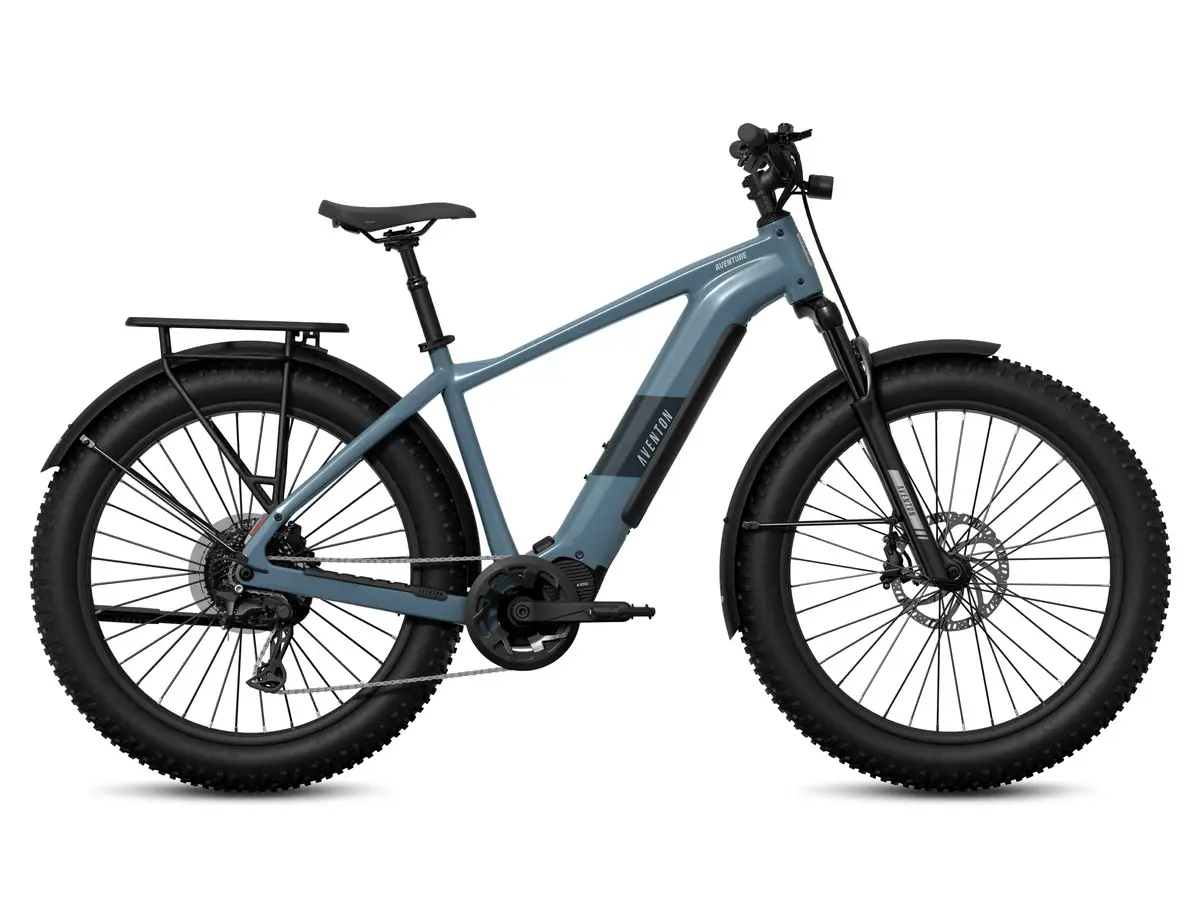
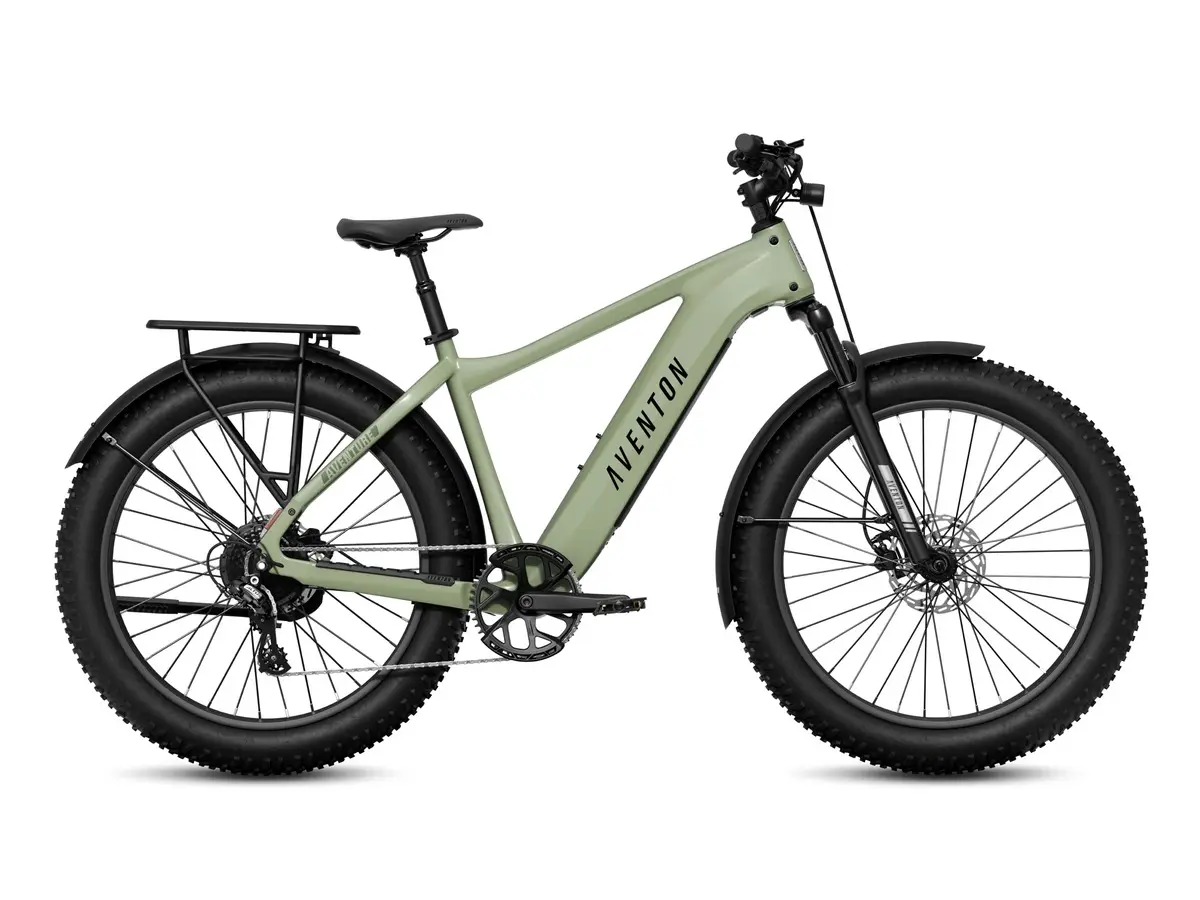
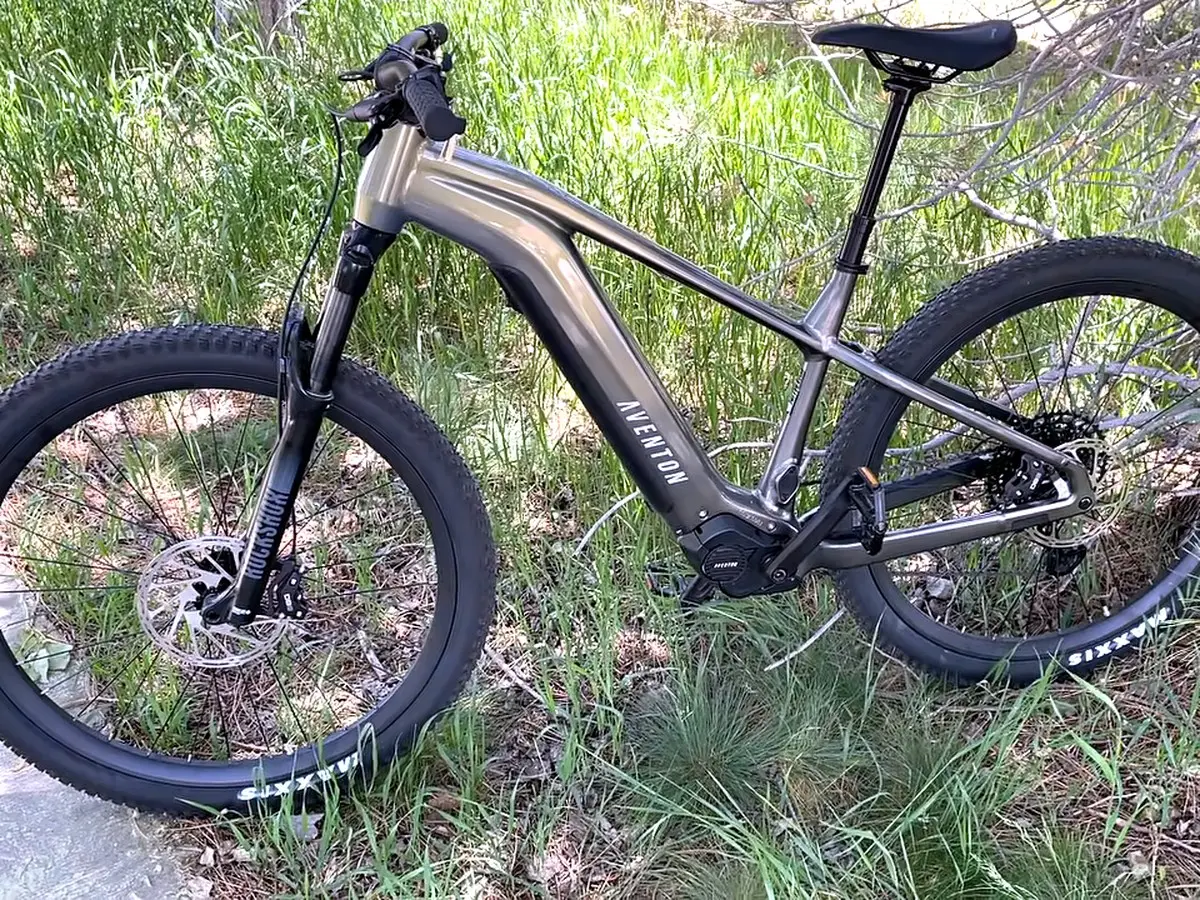
Its 250W-rated mid-drive lists 100 Nm, and it pulled me up climbs with what I called an insane amount of torque. Aventon now sells it as the Ramblas ADV, which I haven't ridden. Read my Aventon Ramblas review.
Scroll sideways on a phone. Rated range is the maker's claim. A dash means I couldn't verify that number. Video = when my review went up on YouTube.
How I picked
Every bike on this page is one I rode and filmed myself (17 bikes, videos from 2020 to 2026). Bikes I haven't ridden are left out.
The top pick for each use is the bike with the highest AEB Score in that group that you can still buy. The score comes from the specs (range, motor, brakes and build, practicality) plus the current maker price, so it's the same yardstick for every bike.
Specs come from the maker's listing, checked against what I saw on the ride. Prices are from my review data; tap through for the current price.
More detail on how I test.
Who should skip each one
Straight from the downsides I hit in each review. If one of these is a dealbreaker for you, look at the next bike.
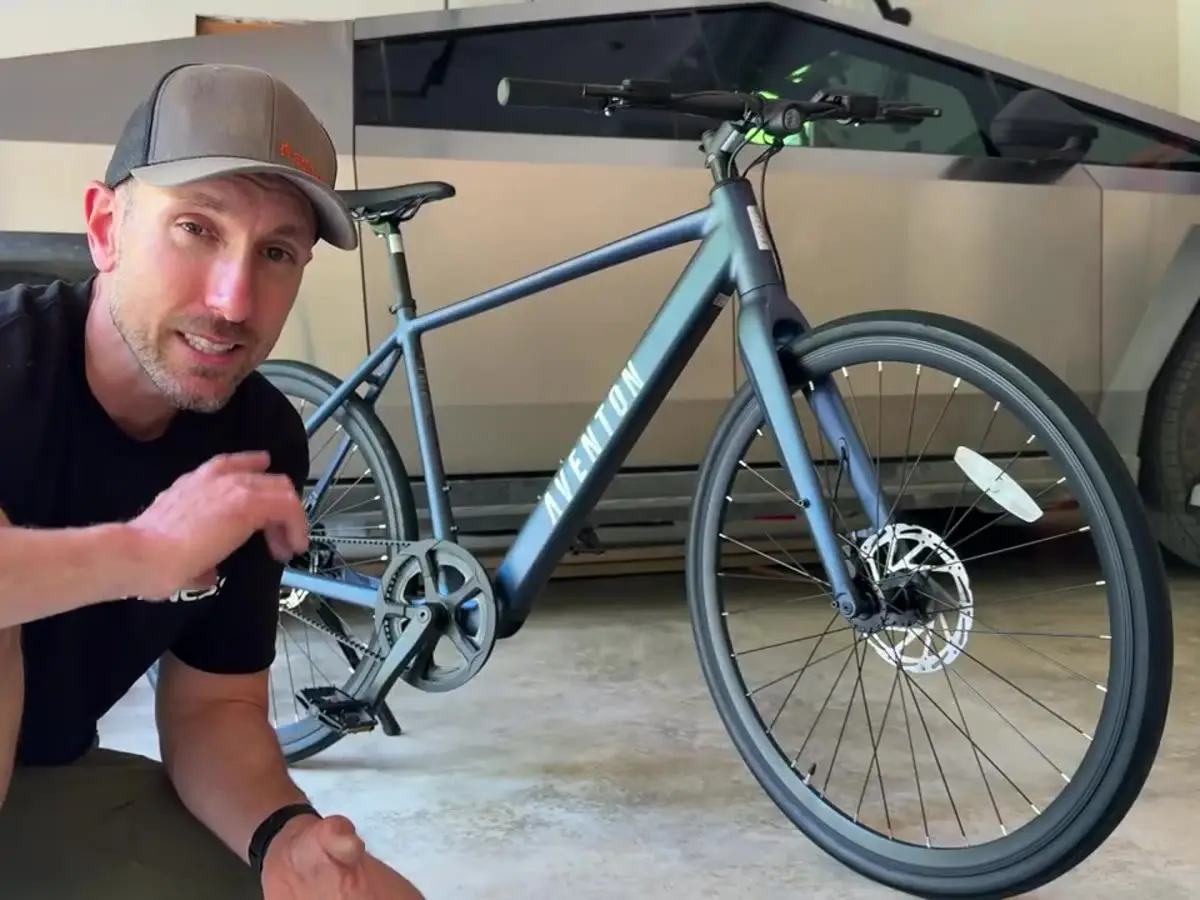
Aventon Ramblas: skip it if this bothers you: Hardtail only, no rear suspension Also: Headlight is optional (I didn't install it)
Aventon Aventure M: skip it if this bothers you: No throttle Also: Rear rack only holds about 59 lb
Aventon Aventure 3: skip it if this bothers you: Turn signals feel a bit gimmicky, and I couldn't find a hazard mode Also: I'd like larger palm-rest grips (an easy swap)
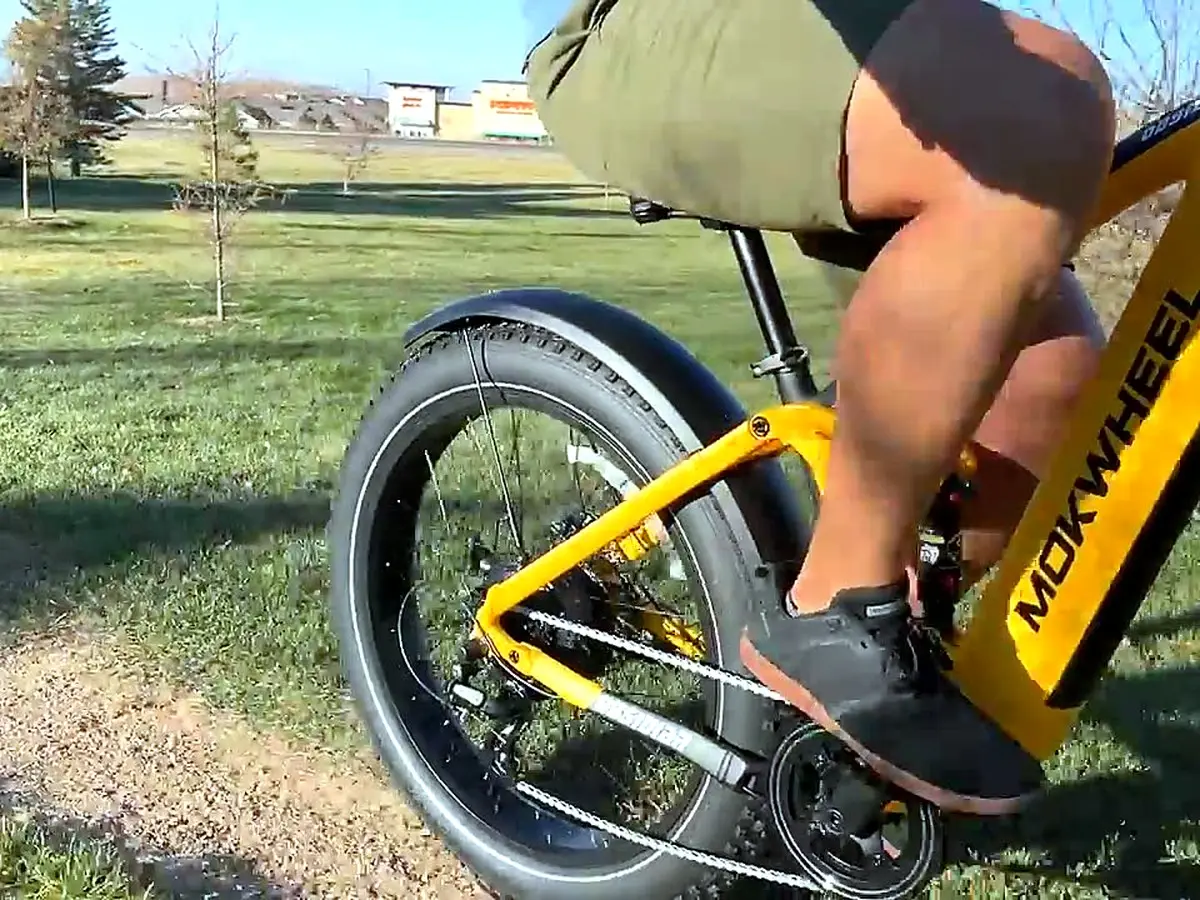
Mokwheel Obsidian: skip it if this bothers you: No integrated tail light Also: Display doesn't connect to your phone
Aventon Pace 500.3: skip it if this bothers you: No suspension; you feel the bumps off pavement Also: Fenders aren't standard
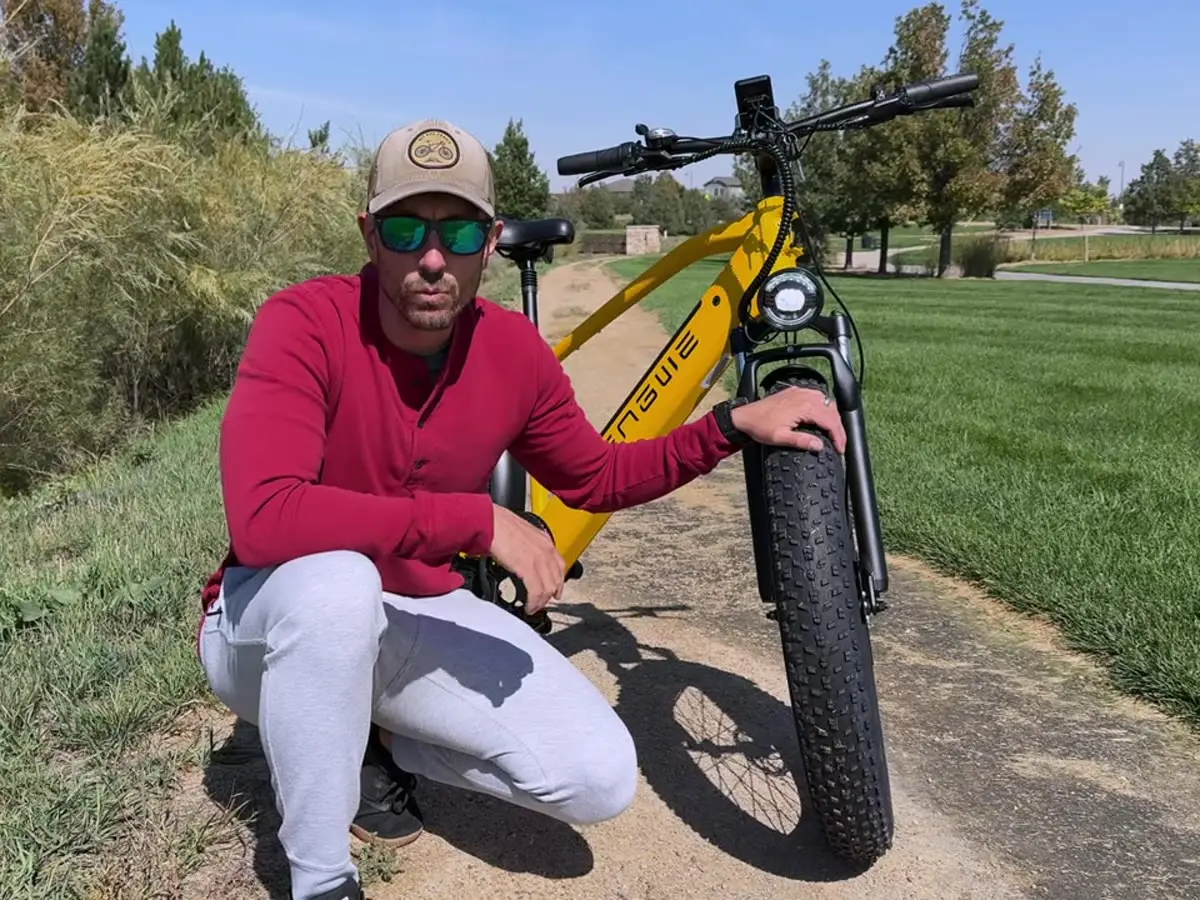
Engwe E26: skip it if this bothers you: Lots of baseline components, including a basic shifter Also: No rear suspension on the bike I tested
Velotric T1 ST: skip it if this bothers you: No shocks, so it's not for rugged off-road trails Also: Battery isn't removable; it's housed inside the frame
Bee Cool Pathfinder: skip it if this bothers you: Very heavy; you'll need a heavy-duty car rack Also: Not a bike to carry up stairs or onto a bus or train
ONEBOT S7: skip it if this bothers you: 250W motor struggles on inclines with an adult rider Also: At 6'1", the seat is maxed out and the pedal stroke feels a bit short
Eahora XC100: skip it if this bothers you: Fork and brake lever arrived damaged Also: 350W motor stalls on hills on throttle alone
Engwe EP-2 Pro: skip it if this bothers you: Heavy to lift, even folded Also: Slow on the throttle from a stop on hills
Aventon Soltera 3 ADV: skip it if this bothers you: Only 250W, so hills on gravel take real effort Also: No throttle
Hiland Sabo 2.0: skip it if this bothers you: Hand grips feel cheap Also: Headlight is battery-operated and straps on, not wired in
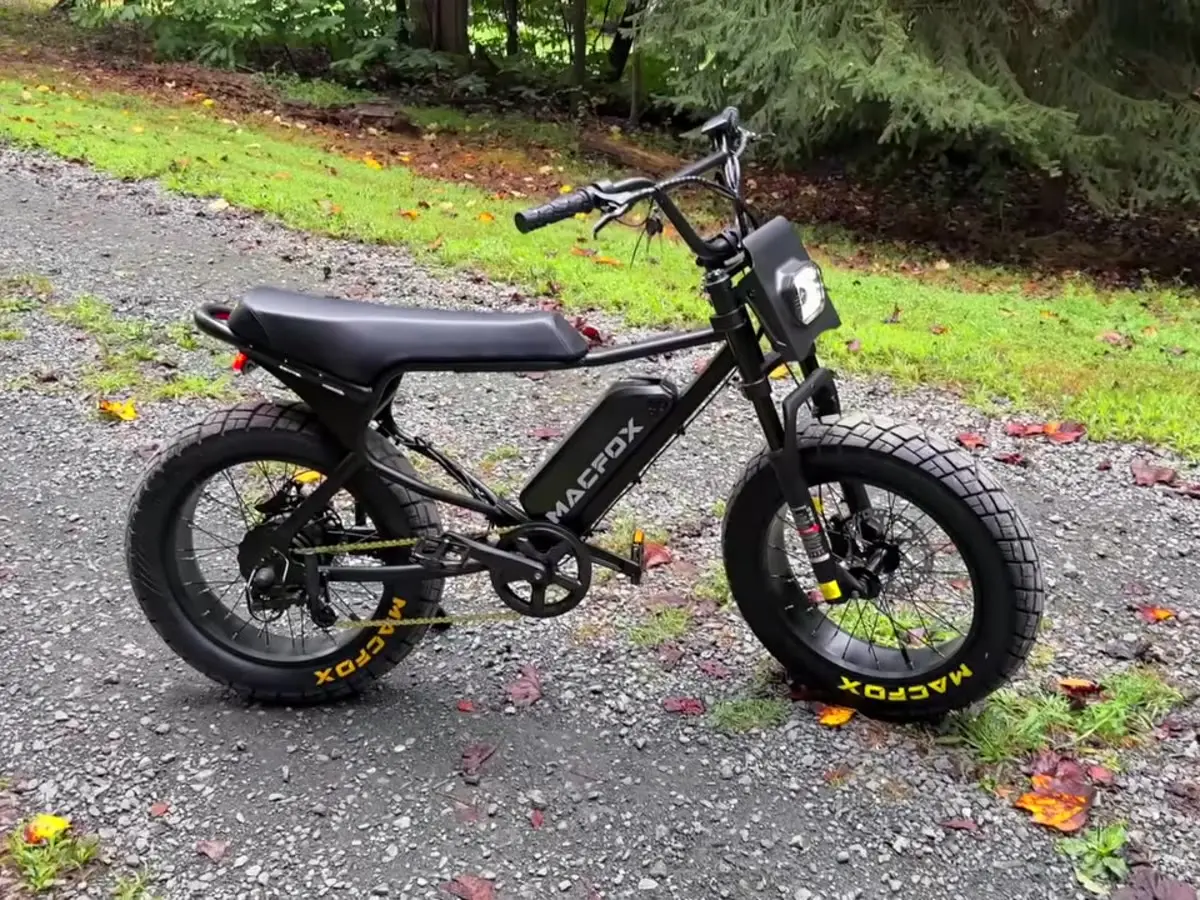
MACFOX X7: skip it if this bothers you: Less power on inclines than I wanted at about 200 lb Also: Headlight has its own power switch, separate from the display
Ziprs F1: skip it if this bothers you: No rear tail light, just a reflector Also: Battery sits under a rubber flap that isn't very secure
Luckeep X1 Pro: skip it if this bothers you: The rear battery sticks out the back Also: The display is a bit hard to see
Rattan LF 750 Pro: skip it if this bothers you: The battery key can't come out while the bike is on Also: Throttle only works when you're in a pedal assist mode
On paper, the mid-drive on the Aventon Ramblas is rated at just 250 watts. On the trail, it pulled me up with what I called an insane amount of torque, especially on the climbs (Ramblas video, 3:33 to 3:40). On a different bike, a 350W hub motor stalled on a little hill and I started rolling back down. Hills are where e-bikes earn their money, and they’re also where the spec sheet fools the most people. Here’s how I think about climbing after testing bikes since 2015, and which bikes actually got me up the hills I ride at about 200 pounds.
The bikes I’d point you to
If you ride steep trails and like to pedal, the Ramblas is the one I’d look at first, though Aventon now sells it as the Ramblas ADV, which I haven’t ridden. If you ride gravel and want the bike to handle the gears for you, the Aventon Aventure M surprised me: I worried its Auto mode wouldn’t keep up on steeper inclines, and it did (Aventure M video, 1:51 to 2:01). If you want a throttle and a hub motor, the Aventon Aventure 3 had plenty of power for any incline as long as I was pedaling (Aventure 3 video, 6:36 to 6:48). Here’s where each one stood on Oct 27, 2026:
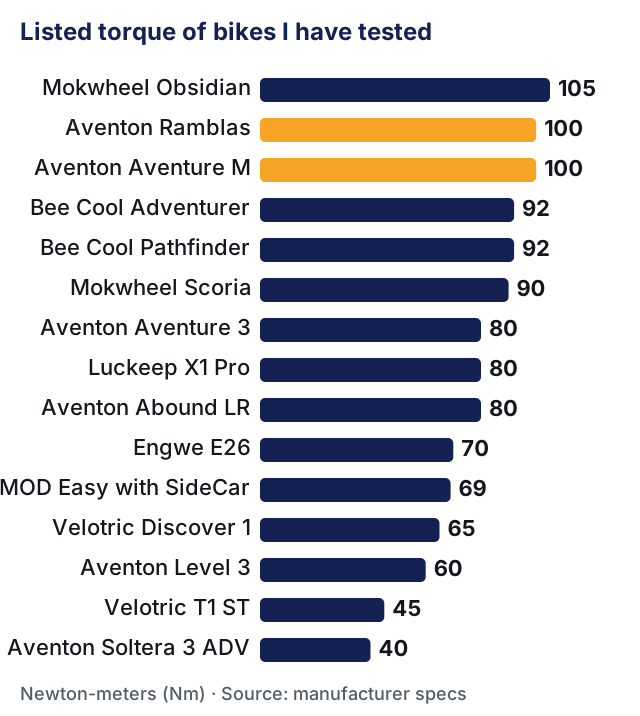
The Obsidian’s 105 Nm is the highest torque listed on any bike I’ve tested, and in my video I said its motor takes you uphill with ease (Obsidian video, 6:16 to 6:20), but I didn’t film a steep climb on it, so treat it as a strong spec rather than a proven climber. The same goes for the Bee Cool Pathfinder, which lists 92 Nm but never faced a steep climb in my video, and was $1,399 and sold out at Bee Cool on Oct 27, 2026. The Pace 500.3 is a good example of how much a decent motor can do: its 500W hub had no problem getting me up any incline at about 200 pounds (Pace 500.3 video, 4:41 to 4:53), but Aventon’s US store doesn’t list it anymore, so for a hub motor climber I’d go to the Aventure 3.
Torque, not watts
So why did a 250W motor out-climb bikes rated three times higher? Watts measure power, how much work the motor can do each second. Torque, listed in newton-meters, measures twisting force, how hard the motor can turn the crank or wheel. On a climb you’re moving slowly, and at low speed what you feel is torque. Power is torque times rotational speed, so a motor with a modest watt rating can still twist hard at low speed. Aventon rates the Ramblas’s A100 mid-drive at 250W sustained and 750W peak, but lists 100 Nm.
Two more things to know when reading watts. Rated watts are what a motor can deliver continuously, and peak is a short burst; the Aventure 3 lists 750W with 1,440W peak, and the Pace 500.3 lists 500W with 864W peak, so compare rated to rated. And in the common US three-class system the motor is capped at 750W, which is why so many bikes I test land right on that number.
Listed torque for every bike I've tested that publishes it: Obsidian 105 Nm; Ramblas and Aventure M 100; Bee Cool Pathfinder and Adventurer 92; Scoria 90; Aventure.3, Abound LR and Luckeep X1 Pro 80; Engwe E26 70; MOD Easy SideCar 69; Velotric Discover 1 65; Level.3 60; T1 ST 45; Soltera 3 ADV 40. Source: manufacturer specs.
A lot of brands don’t list torque at all. Rad doesn’t on the bikes I tested, and neither does Engwe for the EP-2 Pro, where its page had conflicting motor numbers. When a brand won’t tell you, you’re left with reviews.
Why a mid-drive climbs differently
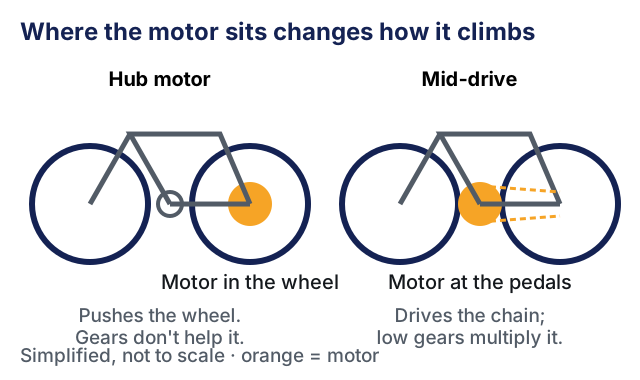
A hub motor turns the wheel directly. A mid-drive turns the crank, so its force goes through the chain and gears, and a low gear multiplies it on a climb. Simplified diagram.
Most bikes I test use a hub motor in the middle of the rear wheel. Hub motors are simple, cheaper, and make it easy to add a throttle. Their weakness on a hill is that the motor always turns at the wheel’s speed, so as you slow on a steep grade the motor slows too, away from the speed where it works best. Shifting down helps your legs, not the motor.
A mid-drive sits at the pedals and drives the chain. Shift into a low gear and the motor keeps spinning near its sweet spot while the wheel turns slowly, which is how the Ramblas’s 250W-rated A100 out-climbed 350W hub motors. The trade-offs are more wear on the chain and cassette, and usually no throttle; neither the Ramblas nor the Aventure M has one out of the box. The Aventure M makes up for that with a hill start assist that gives you an extra push from a stop, a feature I liked (Aventure M video, 7:56 to 8:01).
Hub motor
Mid-drive
Where it sits
In the wheel
At the pedals
Uses the bike’s gears
No
Yes
Throttle
Common
Rare (none on the two I tested)
Drivetrain wear
Lower
Higher
Bikes I tested
Aventure 3, Obsidian, Pace 500.3, E26, Bee Cool
Ramblas, Aventure M
One steep hill, worked out
Here’s the math behind what I felt. Say you weigh 200 lb like me, on a 75 lb bike, about what the Aventure 3 weighs, with 10 lb of gear. That’s 285 lb, about 129 kg, heading up a 10 percent grade, which is steep for a road, at 10 mph, about 4.5 meters per second. You’re climbing about 0.45 meters every second, and the power to lift that weight is 129 kg times 9.81 times 0.45, or about 570 watts, before rolling resistance, wind and drivetrain losses add more. A strong recreational rider can hold maybe 150 to 250 watts for a while.
That’s why a 250W hub motor plus your legs falls well short; on the ONEBOT S7 I was pedaling on any incline (ONEBOT video, 3:59). A 350W hub on throttle alone isn’t enough either, and the Eahora XC100 stalled on a little hill and started rolling back down (Eahora video, 6:04 to 6:45). A 750W hub with its peak output and some pedaling gets there. A mid-drive in a low gear can slow to 6 mph, where the lifting part needs only about 340 watts, and let its torque through the gears do the rest. Slowing down is the cheapest way to climb: half the speed, half the watts for the lifting.
The bikes that needed help
Not every bike I rode made climbing easy. The Engwe EP-2 Pro handled hills fine once moving, but starting on an incline felt a little slow (EP-2 Pro video, 2:45 to 2:52). On the Aventon Soltera 3 ADV, going up a slight gravel incline even in turbo, I had to pedal pretty hard (Soltera 3 ADV video, 4:25); it’s a single speed with 250W and 40 Nm listed. The Hiland Sabo 2.0’s 350W motor helped me up a hill, but I had to pedal (Sabo video, 2:02 to 2:05). And on the MACFOX X7, I was disappointed on inclines and wished it had more power (X7 video, 2:46 to 3:03 and 9:11 to 9:24).
The one small motor that broke the pattern was the Ziprs F1. Its 350W motor felt like 500W to me, even on significant inclines on pedal assist (Ziprs video, 5:29 to 5:54), though the Ziprs site is gone now. The Luckeep X1 Pro’s 750W motor also had plenty of power even on steep inclines (Luckeep video, 4:19 to 4:27), but Luckeep had no product page for it when I checked.
What else helps on a climb
Gears come first. A wide-range cassette keeps you pedaling at a comfortable cadence, and the Ramblas’s SRAM Eagle 12-speed gave me plenty of options to climb (3:23 to 3:31). Single-speed bikes like the Soltera 3 ADV and ONEBOT S7 have nothing to shift to. A torque sensor helps too, because it gives more assist the harder you push; on the Pace 500.3 the upgraded torque sensor felt really natural (Pace 500.3 video, 3:00 to 3:09). A throttle that works from a stop, like the E26’s, gets you rolling at the hardest moment, which is the job the Aventure M’s hill start assist does without a throttle.
Weight and charge matter as well. Every pound you add is a pound the motor lifts; in my example, dropping 30 lb cuts the 570 watts to about 510. And many bikes lose power as the battery drains. On the Rattan LF 750 Pro I noticed significant power loss when the battery got low (Rattan video, 3:11 to 3:17), so start a big climb with a charge.
How I ride a steep hill
My habits matter more than most upgrades. I shift down before the hill, into a gear I could pedal at walking pace, which protects a mid-drive’s chain and keeps my legs useful on a hub motor. I raise the assist at the bottom rather than halfway up, because starting with speed and power is easier than recovering once you’ve slowed. I keep pedaling even on a throttle bike, since 150 to 250 rider watts is a big share of the 570 that hill needs. I accept a slower speed, because 6 mph instead of 10 cuts the lifting power by about 40 percent and keeps the motor cooler. On loose gravel I stay seated so the rear tire keeps its grip. And on the way down I brake in firm bursts instead of dragging the brakes, which heats the rotors. Hydraulic discs are what I want on long descents, and the Aventure M’s SRAM DB4s gave plenty of stopping power (Aventure M video, 5:05).
Plan for range, too. I got 23 miles on the EP-2 Pro on full throttle at 200 lb over a route with a good amount of hills (EP-2 Pro video, 7:51 to 8:22). Climbing burns battery fast, and my folding e-bike guide has a rated vs. tested range chart.
FAQ
How much torque do I need for hills?
From what I’ve ridden, the bikes listing 80 Nm or more that I took up real climbs all handled them at about 200 lb, and the 40 to 45 Nm bikes needed real pedaling. Gearing and motor type matter too, so treat torque as a guide, not a guarantee.
Is a mid-drive better for hills than a hub motor?
Usually, because it uses the bike’s gears. The two mid-drives I’ve tested, the Ramblas and Aventure M, both listed at 100 Nm, were the best climbers I’ve ridden, though 750W hub motors like the Aventure 3’s still handled every hill I tried.
Can a 500W or 250W e-bike climb hills?
A good 500W hub can: the Pace 500.3 had no problem on any incline I tried at about 200 lb. The 250W hub motors I’ve tested struggled with an adult, while the 250W-rated mid-drive on the Ramblas climbed better than anything, because its torque goes through the gears.
Does a throttle help on hills?
It helps you start from a stop. Once you’re moving, pedaling with assist usually climbs better and uses less battery than throttle alone.
Sources
Prices checked Oct 27, 2026 on aventon.com (Aventure 3 $1,999, Aventure M $2,899, Ramblas ADV $2,899, no Pace 500.3 listing), mokwheel.com (Obsidian $1,799.99), beecoolbikes.com (Pathfinder $1,399, sold out), us.engwe.com (E26 $1,699, sold out) and velotricbike.com (T1 ST Plus $1,399). Torque, watt and peak figures are from each maker’s spec pages as cited on my review pages. Ride impressions are from my videos, with timestamps above.
“I lift up my eyes to the hills. From where does my help come? My help comes from the LORD, who made heaven and earth.” Psalm 121:1-2 (ESV)
Check prices for the bikes in this guide
Prices change often, so these links go to the current listing. I only show a price where it's in my review data.